


TL;DR
When subledgers don’t tie to the general ledger, finance teams lose trust in their numbers and spend valuable time reconciling instead of analyzing. Manual processes, disconnected operational systems, and delayed postings are the root cause of most reconciliation failures.
inecta Food ERP automates reconciliation by enforcing a single source of truth across inventory, production, purchasing, sales, and finance—ensuring subledgers tie to the G/L continuously, not just at period end.
If Subledgers Don’t Tie, Nothing Else Matters
Few things undermine financial confidence faster than a subledger that doesn’t tie to the general ledger.
When this happens, finance teams are forced into:
-
Spreadsheet reconciliations
-
Manual journal entries
-
After-the-fact adjustments
-
Lengthy close cycles
-
Stressful audits
-
Executive conversations that start with “we think the number is right…”
The issue is rarely accounting skill.
It’s almost always process and system design.
Disconnected operational systems, delayed postings, and manual workarounds create gaps that surface at month-end or year-end—when it’s most painful to fix them.
A modern ERP should prevent reconciliation issues by design, not rely on cleanup afterward.
Why Subledgers Fall Out of Sync
Subledger discrepancies don’t happen randomly. They follow predictable patterns.
Common causes include:
-
Inventory movements recorded outside the ERP
-
Manual cost adjustments
-
Delayed postings from operations
-
Spreadsheet-based accruals
-
Separate systems for production, warehousing, or purchasing
-
Partial or inconsistent integrations
Each workaround creates a timing difference or data mismatch that compounds over time.
By the time finance discovers the issue, the root cause may be weeks—or months—old.
The real problem isn’t reconciliation itself.
It’s the lack of continuous validation.
Continuous Posting Is the Key to Always-Tied Subledgers
In inecta Food ERP, subledgers and the G/L are not separate worlds.
They are two views of the same transaction.
Every operational event:
-
Receiving inventory
-
Consuming materials
-
Completing production
-
Shipping product
-
Applying landed cost
-
Posting variances
Triggers immediate, automated financial entries.
This ensures:
-
Inventory subledger = G/L inventory balance
-
WIP subledger = G/L WIP balance
-
AP subledger = G/L AP balance
-
AR subledger = G/L AR balance
There is no waiting period where numbers drift.
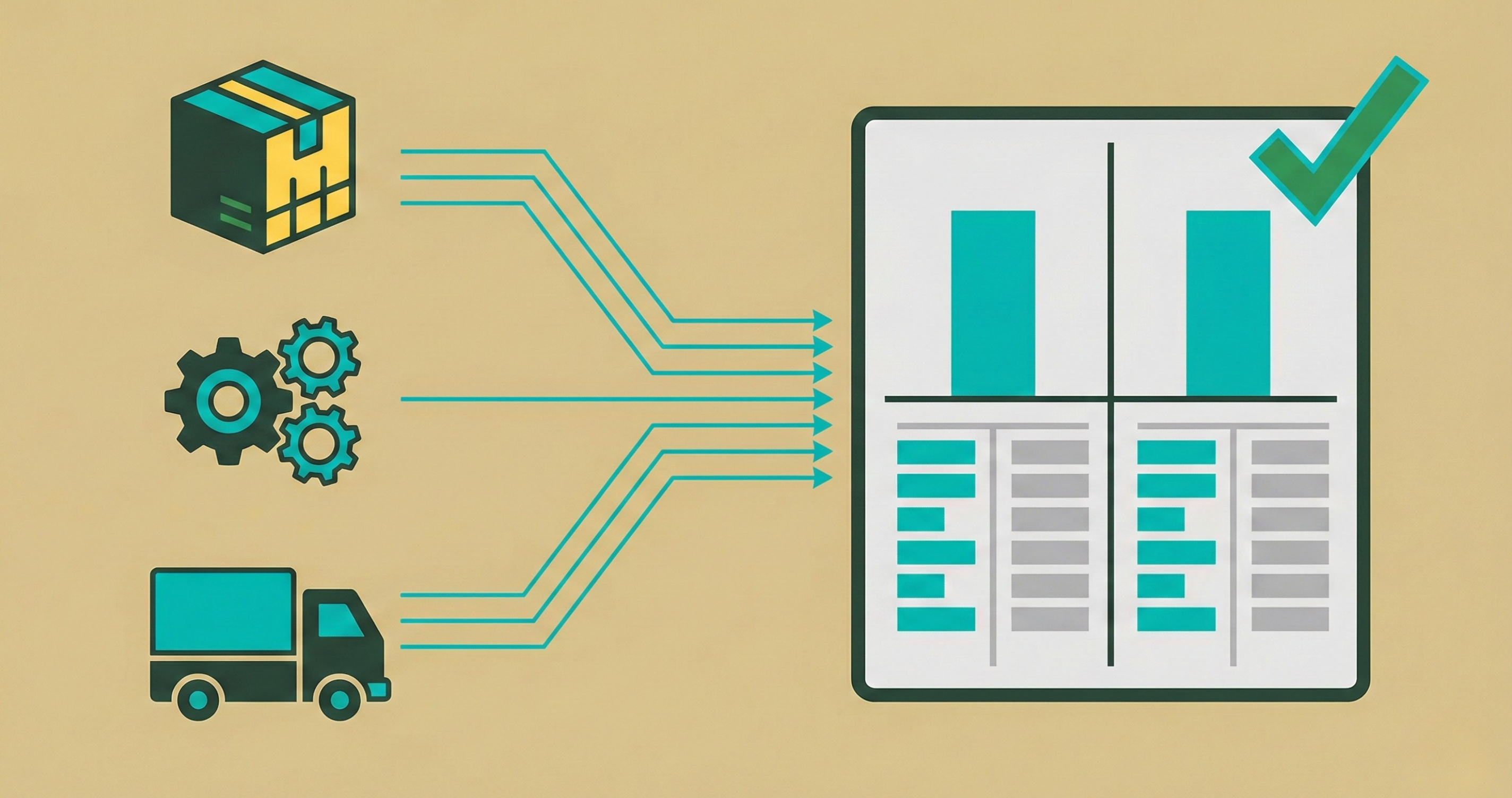
When postings are real-time and system-driven, reconciliation becomes confirmation—not correction.
Automated Reconciliation Removes Human Error
Manual reconciliation introduces risk at exactly the wrong point in the process.
Typical pain points:
-
Manual journal entries without clear audit trails
-
Adjustments that fix symptoms but not causes
-
Reconciliation spreadsheets no one else understands
-
“Temporary” fixes that become permanent
inecta reduces this risk by:
-
Eliminating off-system adjustments
-
Posting directly from operational data
-
Preserving transaction-level audit trails
-
Preventing duplicate or missing entries
-
Enforcing consistent accounting logic
Instead of reconciling numbers after the fact, the system validates them as they are created.
Inventory, WIP, and Costing Are Where Reconciliation Usually Breaks
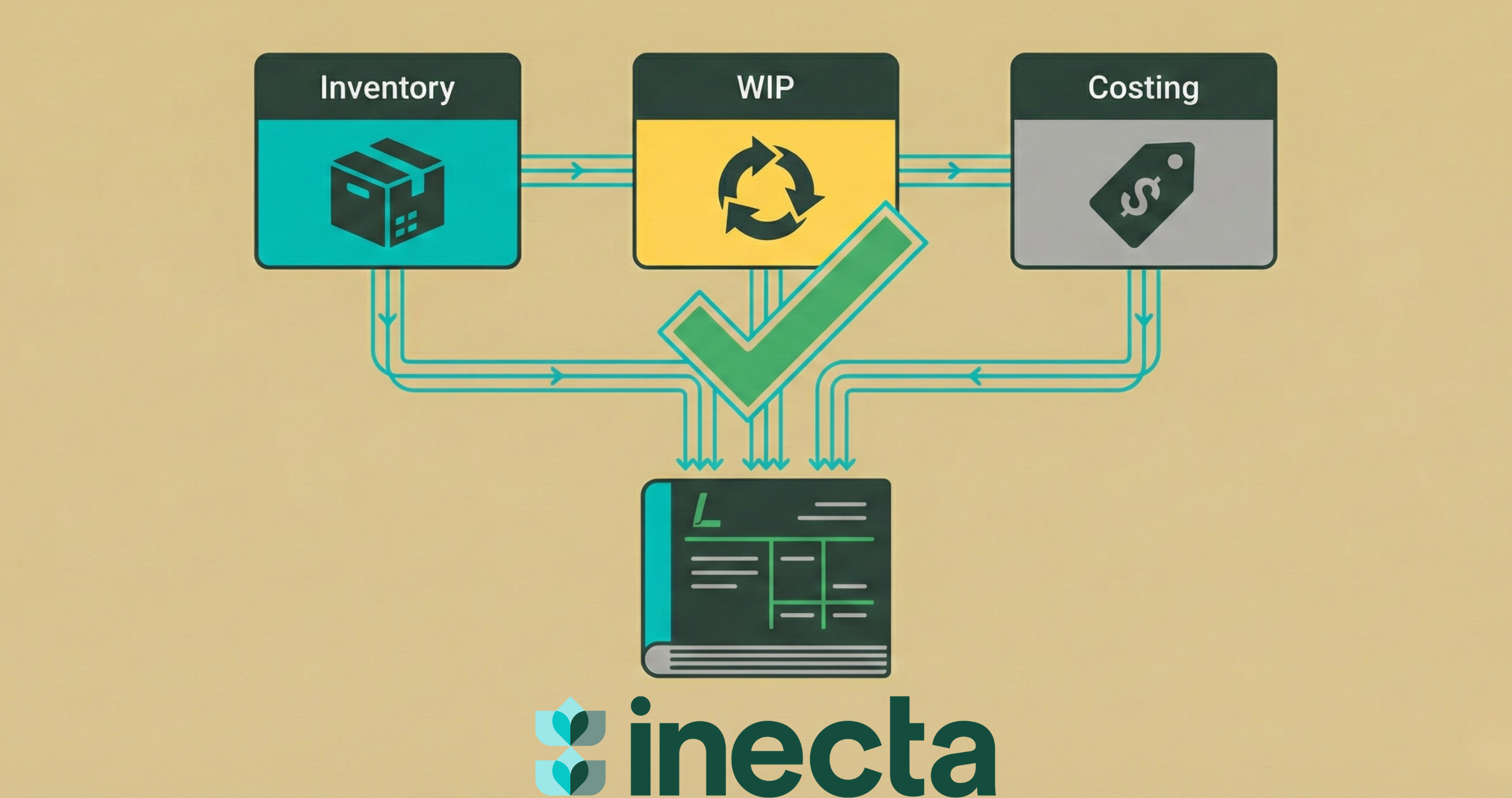
For product-driven businesses, reconciliation issues almost always surface in:
-
Inventory valuation
-
Work-in-process
-
Cost of goods sold
These areas are complex, high-volume, and deeply tied to operations.
inecta ensures alignment by:
-
Tying every inventory movement to a financial transaction
-
Maintaining continuous WIP visibility
-
Applying consistent costing methods (FIFO, FEFO, Average, Standard)
-
Posting variances automatically and transparently
-
Preventing inventory adjustments outside the system
When operational reality and financial records are inseparable, reconciliation errors disappear.
Audit-Ready by Default, Not by Exception
Audits become painful when reconciliation is fragile.
Auditors look for:
-
Clear transaction lineage
-
Consistent balances
-
Repeatable processes
-
Minimal manual intervention
-
Documented controls
When subledgers tie continuously, audits shift from investigation to validation.
With inecta:
-
Every balance is traceable
-
Every posting has context
-
Every adjustment has justification
-
Every period close is defensible
Audit readiness becomes a byproduct of daily operations—not a year-end fire drill.
What “Always Tied” Means for Leadership
When subledgers tie to the G/L consistently, leadership gains:
-
Faster closes
-
More reliable reporting
-
Stronger forecasting
-
Higher confidence in margins
-
Better decision-making
-
Less finance team burnout
Finance moves from reactive cleanup to proactive insight.
That’s the real value of automation.
FAQ
1. What does it mean for subledgers to tie to the G/L?
It means the balances in inventory, AP, AR, and WIP subledgers exactly match the general ledger at all times.
2. Why do subledgers commonly fall out of sync?
Because of manual entries, delayed postings, disconnected systems, and spreadsheet-based workarounds.
3. How does ERP automation prevent reconciliation issues?
By posting financial entries automatically from operational transactions in real time.
4. Is reconciliation still needed with an ERP like inecta?
Yes—but it becomes a validation step, not a cleanup exercise.
Reconciliation should never be the most stressful part of your close.
When subledgers tie automatically, finance teams gain time, confidence, and clarity.
See how inecta Food ERP helps organizations maintain financial accuracy—every day of the year.
👉 Learn more about inecta Food ERP: https://www.inecta.com/food-erp


Free Valuable Resource!
3 simple steps to find your Food ERP
Free Valuable Resource!
3 simple steps to find your Food ERP
*We will never sell your information. Keeping your data and privacy secure is our highest concern.