
49 articles

Seafood operations run on data that doesn't fit a database. Catch registers texted from vessels, offload reports emailed as PDFs, orders handwritten in Chinese. Standard ERPs can't process any of it, which means hours of manual transcription every week. inecta's seafood AI agents understand this freeform data natively, with vessel, trip, and catch register context built in. Here's how purpose-built automation eliminates the transcription bottleneck unique to seafood.

AI agents are configurable, autonomous workers that run inside your ERP, reading email, processing documents, and posting transactions on their own. For food industry CFOs, the fastest wins are AP intake and month-end close. Here's what AI agents do, why generic options fall short for food operations, and how inecta AI Agents are built to run as operators inside your ERP, not assistants outside it.

A cow card is the digital record that follows a single animal from pasture to slaughter to the fab floor. In most beef operations, that record dies at every handoff, fragmenting into three disconnected systems. Here's why an intact cow card is the foundation of real margin analysis, end-to-end traceability, and how inecta Food ERP keeps the record connected from live animal to boxed cut.
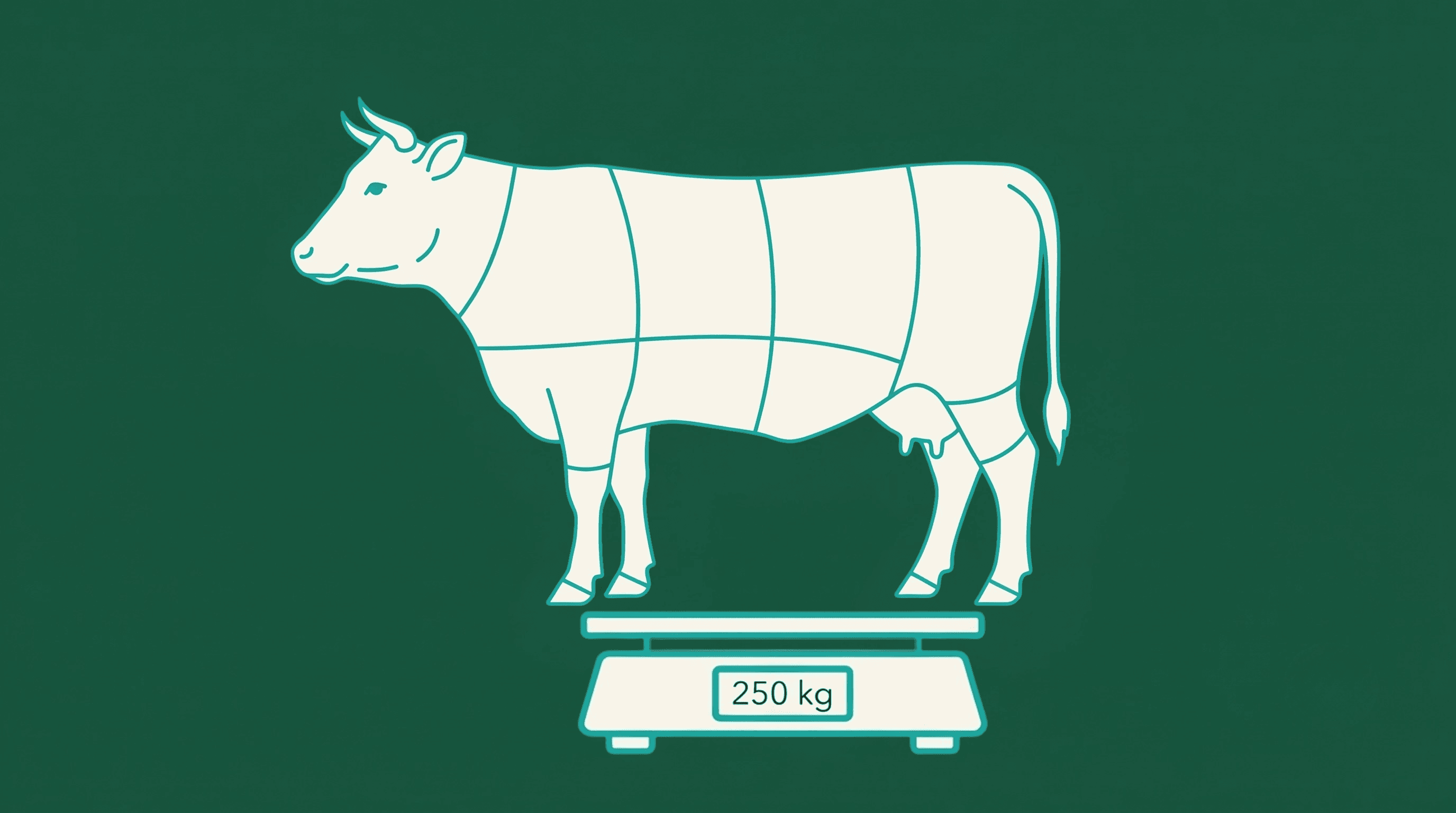
Meat processors don't sell what they make in fixed units. They sell variable-weight cuts from whole animals. Catch-weight and inverse BOM are the two ERP concepts that make this work, and without them, margin disappears between the cutting floor and the invoice. Here's what they are, why they matter, and how inecta Food ERP handles both natively.


Most ERPs report gross margin based on the supplier invoice price plus, at best, a rough freight estimate. True landed cost includes freight, duties, brokerage, insurance, demurrage, currency variance, inbound handling, inspection, rework, and inventory carrying cost — and the gap between the two is usually 3% to 12% of COGS. That gap is exactly where "profitable" SKUs quietly lose money. This article explains why standard ERPs systematically underreport landed cost, what a real landed cost model looks like, and how to close the loop so your gross margin number actually means something.
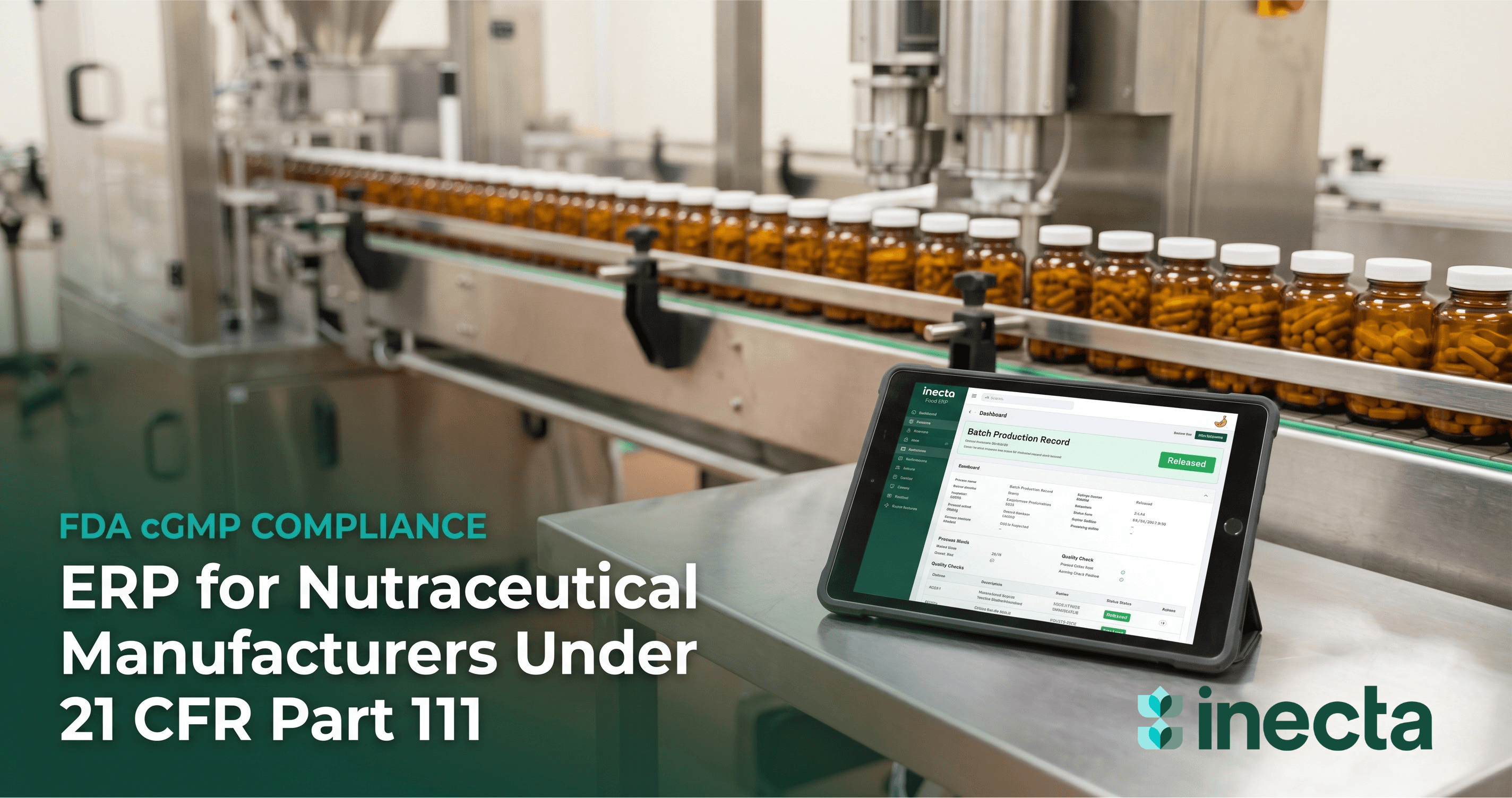
21 CFR Part 111 holds dietary supplement and nutraceutical manufacturers responsible for proving the identity, purity, strength, and composition of every product they ship — and the FDA cited a 46% increase in Part 111 observations between 2023 and 2024. Spreadsheets, paper batch records, and bolt-on quality tools cannot keep pace with cGMP expectations. inecta Food ERP gives nutraceutical manufacturers a single platform for batch production records, identity testing, potency and overage tracking, lot traceability, and automated COA generation — all built into the system, not customized in.
TL;DR Quality control only works when certifications, documentation, and recall processes are connected not scattered across systems, spreadsheets, and file folders. When QA data lives outside operations, businesses lose visibility, slow down recalls, and increase compliance risk.inecta Food ERP unifies quality control, certificates, documentation, and recall workflows into one system so food businesses stay compliant, audit-ready, and recall-prepared without operational friction.

TL;DR Traceability is only as reliable as the inventory data behind it. If quantities, locations, or lot balances are inaccurate, even the most advanced lot-tracking system breaks down. For food manufacturers, distributors, and processors, inventory accuracy is the foundation that enables true end-to-end traceability.inecta Food ERP ensures every lot movement, adjustment, and consumption is recorded in real time so traceability is not just documented, but dependable.
TL;DR When subledgers don’t tie to the general ledger, finance teams lose trust in their numbers and spend valuable time reconciling instead of analyzing. Manual processes, disconnected operational systems, and delayed postings are the root cause of most reconciliation failures.inecta Food ERP automates reconciliation by enforcing a single source of truth across inventory, production, purchasing, sales, and finance, ensuring subledgers tie to the G/L continuously, not just at period end.
TL;DR A clean, predictable year-end close is not just an accounting milestone, it’s the foundation for financial accuracy all year long. When organizations rush year-end with reconciliations undone, data inconsistent, or processes unclear, every downstream decision suffers.inecta Food ERP helps finance teams close with confidence by enforcing structure, visibility, and consistency across inventory, operations, and financials, so leadership starts the new year with numbers they can trust.
TL;DR Fishing operations generate massive amounts of trip data, fuel burn, routes taken, catch details, maintenance events, crew activity, and costs. When these data points live in separate systems, operators lose control.inecta Food ERP unifies all trip-related data into a single, connected trip record, giving fleets real-time visibility, accurate costing, safer operations, and predictable performance from departure to offload.