
FOOD TRACEABILITY SOFTWARE
Food traceability software with lot tracking and recall response
inecta Food ERP captures every lot from receiving through finished product. Forward and backward traceability runs in one query. FSMA 204 Key Data Elements and Critical Tracking Events recorded automatically. Built on Microsoft Dynamics 365 Business Central.

WHY GENERIC ERP TRACEABILITY FALLS SHORT
The five places item tracking breaks down on real food supply chains
Without inecta
- Generic ERP item tracking can't trace ingredients forward to specific customers and shipments in minutes
- FSMA 204 requires Key Data Elements at every Critical Tracking Event, which bolt-on traceability tools can't generate consistently
- Recalls run on spreadsheets cross-referenced by hand against shipping logs and pick tickets
- Allergen and dietary exposure events need lot-level mapping that disjointed systems can't produce under time pressure
- Audits demand documentation scattered across QC, warehouse, production, and shipping systems
With inecta
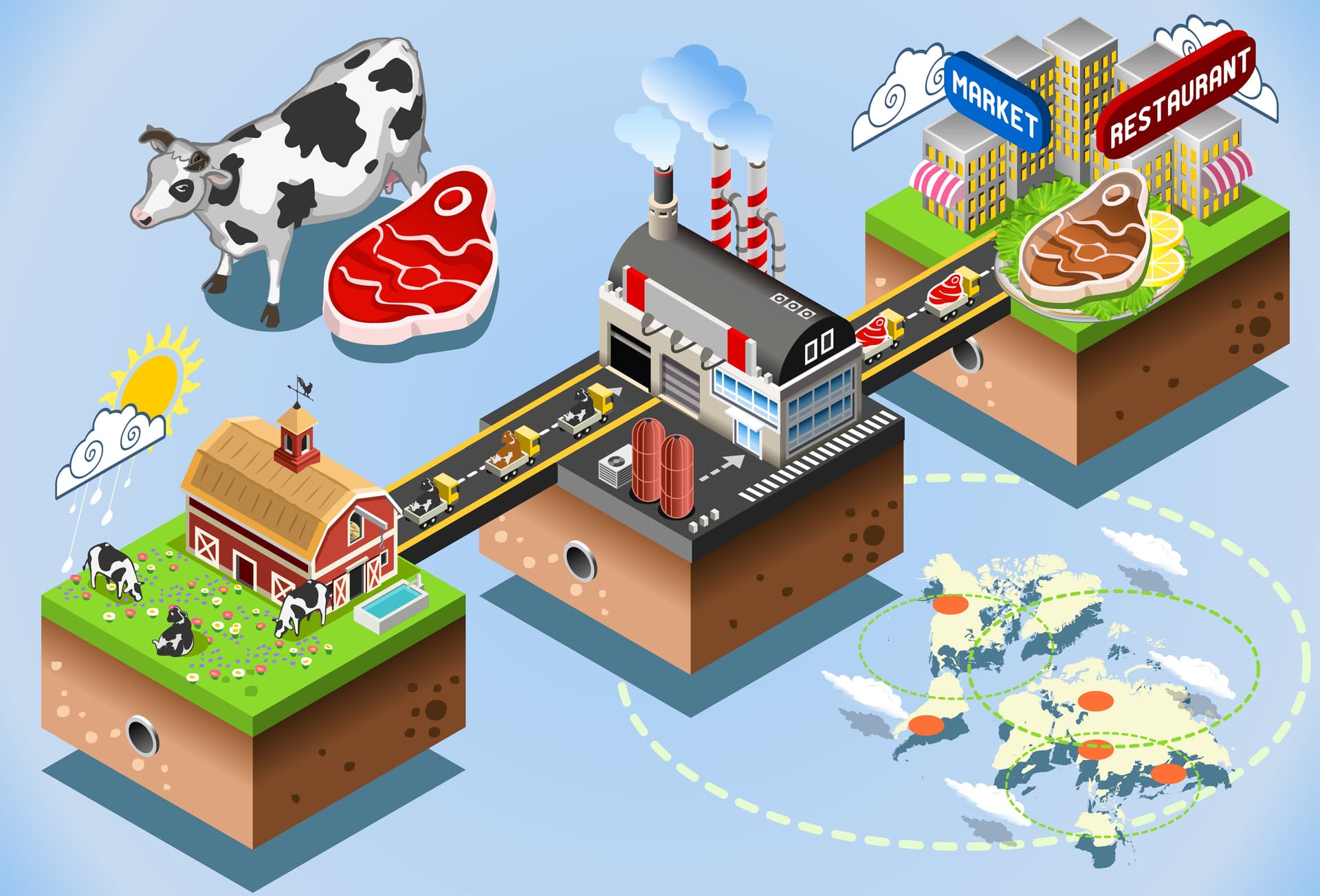
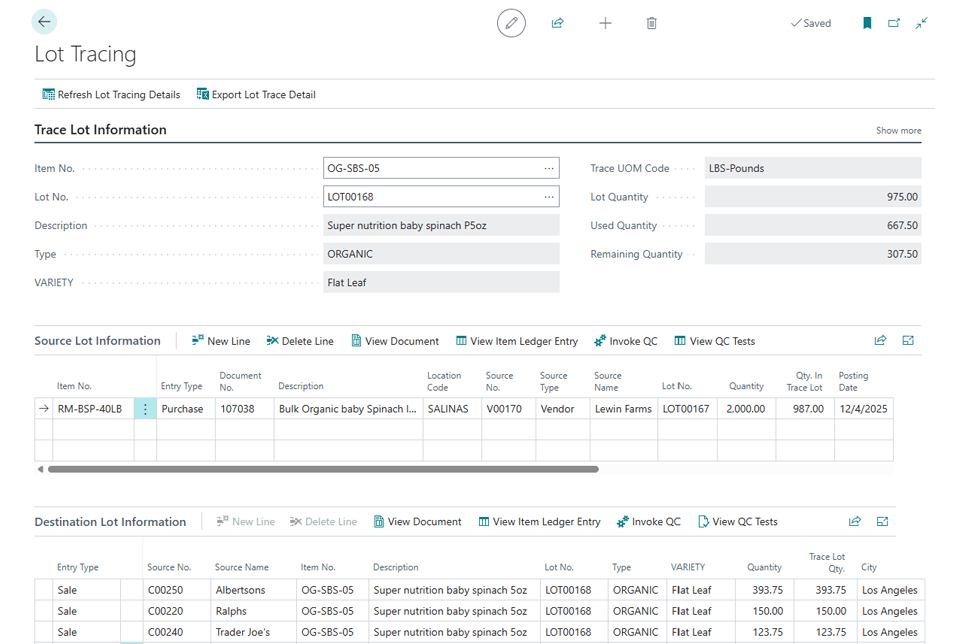
- inecta links every inbound lot to the finished goods, customers, and shipments it became. Forward and backward trace runs in one query.
- KDEs capture automatically at receiving, transformation, and shipping CTEs. Traceability Lot Codes assigned and preserved across the entire supply chain.
- Recall workflow with one-query lot lookup, automatic customer impact reports, hold-and-release on affected inventory, and audit log preserved end-to-end.
- Allergen flags and dietary attributes live at the lot record. Exposure mapping pulls every affected SKU, batch, and downstream customer in one report.
- Every CTE event, KDE capture, QC test result, temperature log, and shipping record stays attached to the lot. Auditors get sortable electronic records in the FSMA 204 required format.
0%
Customer retention rate
0+
Years in food and beverage
0+
Food industry verticals
0%
Cloud-based on Microsoft Azure
WHAT INECTA TRACEABILITY DELIVERS
Lot-level traceability built into receiving, production, warehousing, and shipping
End-to-end lot traceability
Every inbound lot is tracked from receiving through production, packaging, warehousing, and shipment. Lot codes carry through transformations so finished goods retain the genealogy of every input.
Forward and backward trace
Backward trace: pick a finished-product lot, see every input ingredient, supplier, and pickup. Forward trace: pick an inbound ingredient lot, see every downstream batch, SKU, customer, and shipment. Both run as a single query against the lot ledger.
Extended lot attributes
Choose which attributes to track per item: temperature, moisture, pH, harvest date, vessel, grower, country of origin, allergen flags, certifications. Each becomes part of the lot record and travels with the product.
Allergen and dietary control
Allergen flags at the lot level, dietary attributes (kosher, halal, organic, non-GMO) at the item level, and exposure mapping when an incident hits. Cross-contact rules block accidental mixing on the production floor.
Audit-ready documentation
Mock recall reports, traceability exercises, certificate of analysis records, QC results, temperature logs, and CTE event histories preserved per lot. SQF, BRC, HACCP, GFSI, and FSMA audits run on the same record set.
Recall and incident workflow
When a suspect lot is identified, inecta runs the forward trace, generates the customer impact list, places automatic holds on affected inventory, and locks the audit trail. Mock recalls run as test exercises against the same workflow.
FSMA 204 COMPLIANCE
The FDA Food Traceability Rule, captured as a byproduct of normal operations
FSMA 204 (Section 204 of the Food Safety Modernization Act, also called the Food Traceability Rule) requires companies that manufacture, process, pack, or hold foods on the Food Traceability List to maintain detailed records at each Critical Tracking Event. The compliance deadline is July 20, 2028, following the FDA's 30-month extension. inecta Food ERP captures the Key Data Elements the FDA requires at every stage, so your records are audit-ready before an inspector arrives, not assembled in a panic afterward.
- Automatic KDE capture at Receiving, Transformation, Shipping, Initial Packing, Cooling, and First Land-Based Receiver CTEs
- Traceability Lot Code (TLC) assignment carried through every transformation
- Coverage of the full Food Traceability List: certain cheeses, shell eggs, nut butters, cucumbers, leafy greens, melons, peppers, sprouts, tomatoes, tropical tree fruits, RTE deli salads, finfish, crustaceans, mollusks
- Electronic sortable records produced in the format the FDA expects within the 24-hour response window
- Mock recall and traceability exercise workflows for routine readiness testing
Full FSMA 204 deep dive: FSMA 204 Compliance Guide: KDEs, CTEs, and the July 20, 2028 Deadline covers all 7 Critical Tracking Events, the 7 KDE types in a matrix, the full Food Traceability List, the small-business exemptions, and the Walmart August 2025 retailer deadline.
KEY DATA ELEMENTS (KDES)
The information FSMA 204 requires at every Critical Tracking Event
Traceability Lot Code (TLC)
The unique identifier that ties a specific lot of food to its source. inecta assigns TLCs at the first applicable CTE and carries them through every downstream event.
Location identifiers
Address or geographic coordinates of where each CTE occurred, plus the TLC source reference (where the food was sourced or shipped from), captured automatically from the originating record.
Dates and quantities
Receipt date, shipping date, transformation date, harvest date, and pack date are recorded against the lot, with quantities at each CTE in the appropriate unit of measure.
Product identifiers
Item description and any applicable item codes (GTIN, internal item numbers) recorded at every CTE so the food can be identified consistently across the supply chain.
Trading partner references
Reference document numbers (bills of lading, PO numbers, shipping manifests) tying CTEs to the source and destination trading partners.
Pack and harvest data
For initial packing and first land-based receiving CTEs: harvest location, harvest date, packer location, and packing date. These are the foundational records the FDA expects food to be traced back to.
CRITICAL TRACKING EVENTS
The seven events where the FDA requires traceability records
A Critical Tracking Event is an operation or handling event the FDA has identified as requiring KDE capture. inecta records KDEs against the standard Business Central Item Ledger and Lot Information records, so the documentation exists at the moment the event happens rather than being reconstructed later. Each CTE has a specific KDE set defined in the FDA's CTE/KDE matrix, and inecta routes capture per item configuration.
- Harvesting: date, harvester, location of growing area, TLC assignment
- Cooling: date, time, location, TLC reference
- Initial Packing: packer, location, date, harvest area reference
- First Land-Based Receiver: vessel, catch location, catch date (seafood-specific)
- Shipping: destination, ship date, item, lot, quantity, reference document
- Receiving: supplier, item, lot, quantity, receipt date, reference document
- Transformation: input lots, output lots, transformation date, new TLC assignment
RECALL AND INCIDENT MANAGEMENT
From suspect lot to customer impact report in minutes
When a recall hits, the question is not whether you have traceability data. The question is whether you can pull it fast enough. inecta's recall workflow starts from a suspect lot and runs the forward trace through every downstream batch, SKU, customer, and shipment. Holds drop on affected inventory across all warehouses. The audit log of every event tied to the lot locks. Mock recalls run as test exercises against the same workflow, so the procedure is rehearsed before an incident, not invented during one.
- One-query forward trace from suspect lot to every downstream customer and shipment
- Automatic inventory holds across all warehouses and aging rooms
- Customer impact reports with quantity, ship date, and contact details
- Mock recall exercises for SQF, BRC, HACCP, GFSI, and FSMA 204 readiness audits
- Full event history preserved electronically for FDA response within the required window
TRACEABILITY ACROSS EVERY FOOD VERTICAL
One lot ledger, industry-specific KDE configurations
Seafood
Vessel-level catch records, SIMP import compliance, FSMA 204 First Land-Based Receiver CTE capture, cold-chain traceability through customer shipment.
Meat and poultry
Primal-to-retail traceability with USDA and FSIS reporting, slaughter and break room genealogy, and lot-level recall against ground product made from multiple inputs.
Produce
Grower and harvest records, FSMA 204 Harvesting/Cooling/Initial Packing CTEs, pack-house operations, lot-level traceability through field, cooler, and distribution.
Dairy
Milk pickup ticket capture, component-based traceability through cheese, whey, butter, and yogurt lines, aging-room lot attributes, retroactive FMMO settlement audit trail.
Bakery
Batch-level traceability across high-volume production, allergen exposure mapping for shared lines, ingredient lot tracking from receiving through finished goods.
Beverage
Tank and blend traceability, batch-level QC and lot records, packaging-line scheduling tied to source lots, deposit and returnable container tracking.
BLOCKCHAIN AND GS1 STANDARDS
Where blockchain fits, and where the ERP stays the system of record
Blockchain traceability has a real role in food supply chains: a tamper-proof shared ledger between trading partners. It is not a replacement for the ERP-level lot record. inecta uses GS1 standards-based lot identifiers (GTIN, batch/lot, expiration date) and supports GS1-128 barcode parsing on the warehouse floor. CTE event records can be exported in EPCIS-compatible formats for customers participating in shared traceability networks, including industry frameworks like the Global Dialogue on Seafood Traceability.
- GS1 standards-based lot identifiers (GTIN, batch/lot, expiration date)
- GS1-128 barcode parsing for receiving, putaway, picking, and shipping
- EPCIS-compatible export of CTE event records
- Ready to integrate with trading-partner blockchain platforms and shared traceability networks
- Standards-first approach: the ERP is the system of record, external networks are downstream consumers
FREQUENTLY ASKED QUESTIONS
Common questions about food traceability software, FSMA 204, and recall response
Food traceability software records every movement, transformation, and shipment of a food product against a lot identifier. Forward traceability lets you start with an inbound ingredient lot and see every downstream batch, SKU, customer, and shipment it became. Backward traceability does the reverse: pick a finished product and see every input, supplier, and pickup that contributed to it. inecta Food ERP builds traceability directly into receiving, production, warehousing, and shipping workflows so the records exist as a byproduct of normal operations rather than as a separate documentation exercise.
FSMA 204 is Section 204 of the Food Safety Modernization Act, also called the Food Traceability Rule or the Requirements for Additional Traceability Records for Certain Foods. The final rule was published by the FDA in November 2022. The compliance deadline was originally January 20, 2026, but the FDA finalized a 30-month extension, moving it to July 20, 2028. The rule applies to foods on the Food Traceability List (FTL), which includes certain cheeses, shell eggs, nut butters, cucumbers, fresh herbs, leafy greens, melons, peppers, sprouts, tomatoes, tropical tree fruits, ready-to-eat deli salads, and certain finfish, crustaceans, and mollusks.
A Critical Tracking Event (CTE) is an operation or handling event the FDA has identified as requiring traceability records: Harvesting, Cooling, Initial Packing, First Land-Based Receiver, Shipping, Receiving, and Transformation. A Key Data Element (KDE) is the specific piece of information that must be recorded at each CTE, such as Traceability Lot Code, location identifier, date, quantity, item description, and reference document number. The FDA published a CTE/KDE matrix that defines which KDEs must accompany each CTE. inecta captures the required KDEs automatically at each CTE based on item configuration.
When a suspect lot is identified, the recall workflow runs the forward trace from that lot through every downstream batch, SKU, customer, and shipment. inecta generates a customer impact report, places automatic holds on affected inventory in your warehouses, and locks the audit trail of every event tied to the lot. Mock recalls run as test exercises against the same workflow, producing the documentation auditors and certification bodies expect (SQF, BRC, HACCP, GFSI). The full record set is preserved electronically and can be provided to the FDA within the 24-hour window the FSMA 204 rule requires.
Yes. Allergen attributes live at the lot record, dietary attributes (kosher, halal, organic, non-GMO, gluten-free) live at the item or lot level depending on configuration, and cross-contact rules prevent accidental mixing on shared production lines. If an allergen incident occurs, exposure mapping pulls every affected SKU, batch, and downstream customer through the same forward-trace mechanism used for recalls.
inecta uses GS1 standards-based lot identifiers (GTIN, batch/lot, expiration date) and supports GS1-128 barcode parsing for receiving and shipping. EPCIS-style CTE records are available for export. For customers participating in blockchain-based traceability networks (such as the Global Dialogue on Seafood Traceability framework or trading-partner-specific platforms), inecta's lot records and CTE events can be exported in compatible formats. The ERP remains the system of record; blockchain platforms operate as shared trading-partner ledgers on top.
inecta Food ERP traceability covers every food and beverage vertical: seafood (vessel records, SIMP, First Land-Based Receiver CTE), meat and poultry (USDA/FSIS, primal-to-retail), produce (Harvesting/Cooling/Initial Packing CTEs, grower and harvest records), dairy (milk pickup ticket, component-based lots, aging attributes), bakery (batch-level allergen mapping), and beverage (tank and blend traceability, packaging-line scheduling). Each vertical uses the same underlying lot ledger with industry-specific KDE configurations.
Yes. inecta Food Traceability Software is delivered as part of inecta Food ERP on Microsoft Dynamics 365 Business Central, so traceability data lives in the same system as purchasing, production, inventory, sales, and financials. There is no separate traceability database to sync. Every CTE event is recorded against the standard Item Ledger and Lot Information records, with food-specific KDE capture and FSMA 204 workflow extending the platform.
INDUSTRIES WHERE TRACEABILITY IS CRITICAL
See how different food verticals use inecta traceability
Seafood Processing
Catch tracking, SIMP reporting, First Land-Based Receiver CTE capture, and full chain-of-custody documentation from vessel to customer.
Learn more →Meat & Poultry Processing
Primal-to-retail traceability with USDA and FSIS compliance, slaughter and break room genealogy, and lot-level recall readiness.
Learn more →Produce Distribution
Lot-level traceability from grower and harvest date through cooling, packing, storage, and shipment.
Learn more →Dairy ERP
Milk pickup ticket capture, component-based lot tracking, aging-room attributes, and FMMO settlement audit trail.
Learn more →Food ERP
The complete food and beverage ERP. One system for purchasing, production, inventory, finance, and traceability.
Learn more →Food Labeling Requirements
FDA labeling, allergen declarations, nutritional facts, and ingredient lists, backed by lot-level traceability data.
Learn more →Ready to see lot traceability software built for FSMA 204 and recall response?
Book a discovery call. inecta extends Microsoft Dynamics 365 Business Central with traceability captured as a byproduct of normal operations: KDE/CTE capture, lot-level forward and backward trace, allergen mapping, and recall workflow.