

Seafood
MONTH-END CLOSE CUT FROM 3 WEEKS TO 1 WEEK

PRODUCE ERP SOFTWARE
inecta Food ERP is built for the full produce supply chain. Grower receiving and settlements, FEFO cold chain, FSMA 204 traceability for FTL items, PTI-compliant labeling, catch weight, and market-tied pricing all live on one tenant. Delivered on Microsoft Dynamics 365 Business Central, with 25 years of food and beverage focus on the same platform.
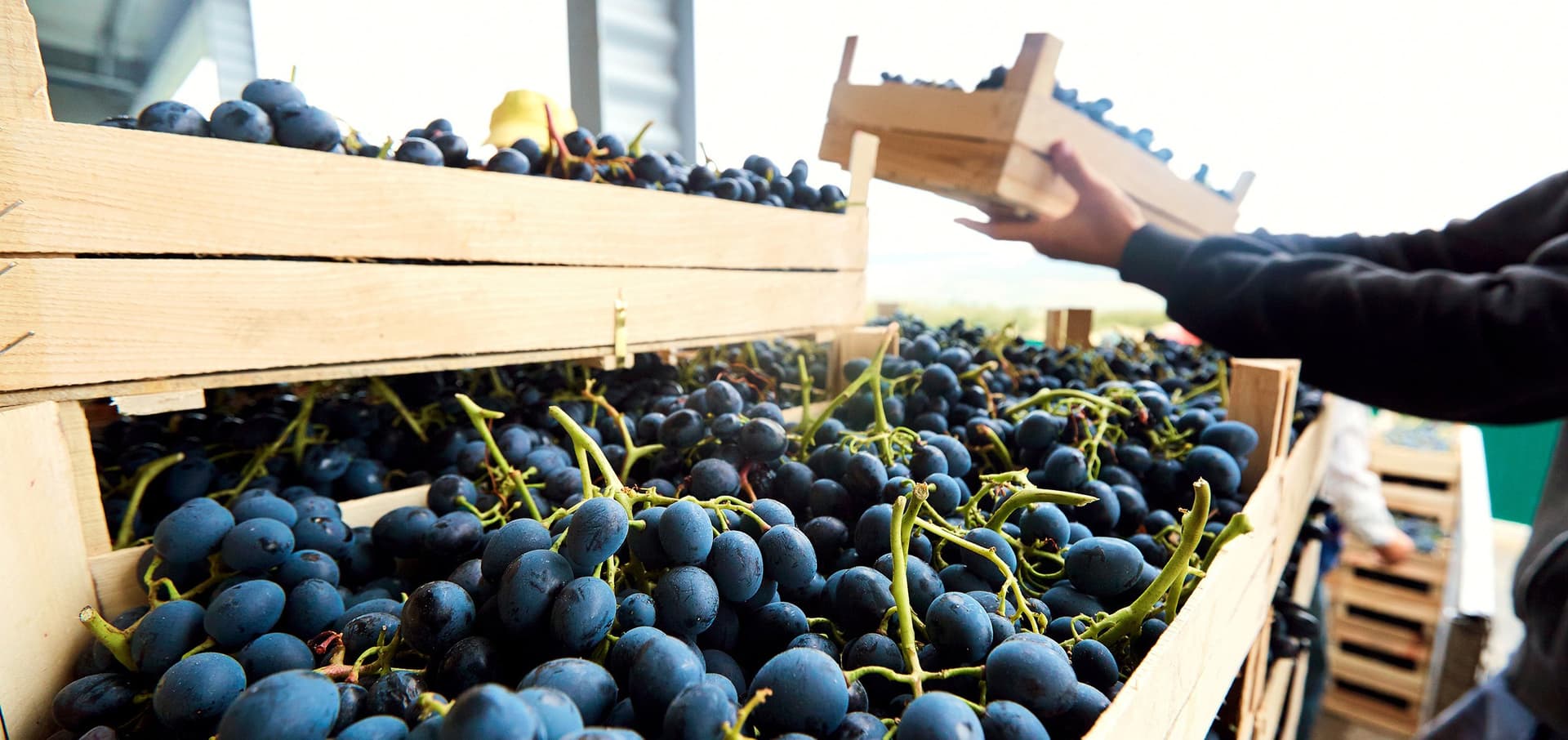
The five places standard ERPs break down on grower intake, perishability, FSMA 204, and market pricing
0%
Customer retention rate
0+
Years in food and beverage
0+
Food industry verticals
0%
Cloud-based on Microsoft Azure
Produce-specific functionality on Microsoft Dynamics 365 Business Central
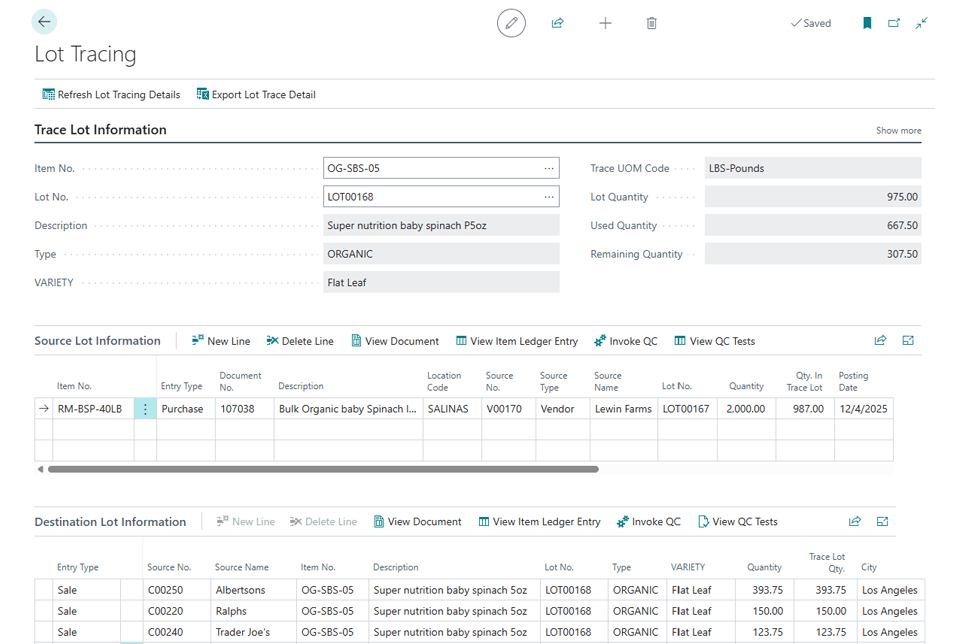
Pickup-to-pay on one tenant. Receiving captures weight, grade, variety, pack style, and harvest date by lot. Pool pricing, advances, premiums, deductions, and per-grower formulas run into settlement statements posted to the Business Central general ledger, no separate accounting bolt-on.
First-Expired-First-Out picking with shelf-life rules per SKU and per customer. Cooler zones and temperature ranges tracked from intake through staging and load. Expiration warnings fire before product loads, so the fresh case is the case that ships.
Key Data Elements captured at receiving, transformation (repacking, value-add), and shipping. All seven Critical Tracking Events recorded automatically as part of normal warehouse and production transactions. Forward and backward recall in one query for FTL produce.
Produce Traceability Initiative compliant case labels with GS1-128 barcodes, GTINs, lot codes, pack dates, and country of origin. Labels print at the line and flow into customer ASNs (EDI 856) and recall reports without re-entry.
Two units on every transaction (case and actual weight) so customers buy and bill on the weight that actually shipped. Catch weight flows from receiving through repacking, picking, and the customer invoice without manual reconciliation.
Daily market-tied pricing with customer-specific formulas, market-quote ingestion, rebate accruals, and dead-net margin checks. EDI 850 / 855 / 856 / 810 transactions handle retail and foodservice trading-partner flow on the same Business Central tenant.
Pickup-to-pay on the same record the rest of the supply chain uses
Grower accounting is where produce ERP either matches reality or invents it. Pickups arrive with variable weights, variable grades, and a different mix of varieties every day, and the price the grower gets depends on pool calculations, advances, deductions, and a market that moved between harvest and settlement. inecta captures every pickup at receiving and runs the full settlement calculation in the same Business Central tenant that handles sales, inventory, and finance, so the producer ledger reflects what actually shipped, not a reconciliation cobbled together monthly.
FEFO picking, shelf-life rules per customer, cooler-zone visibility end to end
Fresh produce ships on a 5 to 21 day shelf-life window depending on commodity, and a generic FIFO warehouse is wrong by default. inecta enforces FEFO picking with shelf-life rules set per SKU and per customer, so a customer that requires 12 days of life on receipt never gets product with eight days left. Cooler zones, temperature ranges, and cold-chain readings are recorded against the same lot used for invoicing, so the temperature record and the financial record draw from one source.
Most of the FTL is produce. Capture KDEs and CTEs as a byproduct of running the business.
The FSMA 204 Food Traceability Rule takes effect July 20, 2028, and the Food Traceability List leans heavily into produce: fresh-cut fruits and vegetables, fresh herbs, leafy greens, melons, peppers, sprouts, tomatoes, tropical tree fruits, and cucumbers. inecta records Key Data Elements (lot codes, dates, location identifiers, trading-partner references) at every Critical Tracking Event from receiving through transformation to shipping, so the 24-hour sortable spreadsheet the rule asks for is an export, not a project. The same lot data feeds PTI labeling, customer ASNs, and recall reports.
Market-tied pricing with rebate accruals and EDI on the same tenant
Produce pricing moves daily, and customer contracts add a layer that no off-the-shelf ERP handles cleanly: market-tied formulas, dead-net price floors, rebate accruals, promotional allowances, and customer-specific discount stacks. inecta ingests daily market quotes, applies customer formulas at quote time, accrues rebates against shipments, and runs dead-net margin checks before a salesperson commits to a price. EDI 850 / 855 / 856 / 810 transactions run on the same tenant, so retail and foodservice trading-partner flow stays connected to the order desk and the warehouse.
One platform across growers, packers, fresh-cut, distributors, importers, and specialty operations
Farm-level operations from planting through harvest. Lot capture at the field, harvest period tracking, pickup-ticket capture, and settlements integrated with the rest of the supply chain.
Pack-house operations, line-level yield, repacking and value-add, PTI-compliant case labels, and direct integration to the GL so pack-out costs roll up to real margin per customer.
Multi-step transformation (wash, cut, blend, MAP packaging) with full lot inheritance, allergen attributes, and FSMA 204 CTE capture at every transformation step.
EDI-driven order flow from retail and foodservice partners. Customer-specific shelf-life and freshness rules, route accounting, and DSD for distributors who deliver directly to outlets.
Import operations with country of origin labeling (COOL), broker fees, duties, landed cost roll-up, and multi-currency reporting. Customs paperwork tied to the lot, not to a separate spreadsheet.
Certification tracking (organic, GAP, GFSI, kosher, halal), specialty variety management, and segregation rules for organic lots through receiving, storage, and shipping.
Real outcomes from real customers
Seafood
MONTH-END CLOSE CUT FROM 3 WEEKS TO 1 WEEK

Halal Meat Processing
SYSTEM BUILT AROUND THEIR PROCESS, NOT AGAINST IT

Pet Food
THREE DISCONNECTED SYSTEMS REPLACED BY ONE
Common questions about inecta produce ERP software
Produce ERP software is an Enterprise Resource Planning system designed for the way produce companies actually operate: grower receiving, perishability and shelf life, FEFO cold chain, PTI-compliant labeling, FSMA 204 traceability for FTL items, catch weight and variable-weight pricing, and market-tied customer pricing. Generic ERP treats every product the same. Produce ERP records grower, harvest date, variety, grade, and pack style on every lot, and lets a recall query run end to end in seconds instead of days. inecta Food ERP is delivered on Microsoft Dynamics 365 Business Central with produce-specific functionality layered on top.
Every pickup is captured at receiving with weight, grade, variety, pack style, and harvest date as lot attributes. Pool pricing, advances, premiums, and deductions are applied per grower contract automatically. Settlement statements generate from pickup data and post to the Business Central general ledger without manual reconciliation. Multi-grower pooling, retroactive price adjustments, and pickup-to-pay reporting all run on the same tenant the rest of your operation uses.
Yes. The FSMA 204 Food Traceability Rule takes effect July 20, 2028, and applies to a long list of produce categories on the FTL: fresh-cut fruits and vegetables, fresh herbs, leafy greens, melons, peppers, sprouts, tomatoes, tropical tree fruits, and cucumbers. inecta captures the required Key Data Elements (lot codes, dates, location identifiers, trading-partner references) at receiving, transformation (repacking and value-add), and shipping, with all seven Critical Tracking Events recorded as part of normal warehouse and production transactions. Forward and backward recall runs as a single query. See our FSMA 204 Compliance Guide for full deadline, FTL, and KDE / CTE breakdown.
Shelf life is recorded per SKU and per lot, and First-Expired-First-Out picking is enforced through the warehouse module. Customer-specific freshness windows are honored at pick time, so a 12-day shelf-life customer never gets product with eight days left. Cooler zones and temperature ranges are tracked from intake through staging and load, with expiration warnings firing before product loads. Distributors who need cold-chain proof for retail customers can produce the temperature record from the same lot used for invoicing.
Yes. Catch weight is native: every transaction holds two units (the case and the actual weight) so receiving, transformation, picking, and the customer invoice all reflect what actually shipped. Market-tied pricing supports daily quote ingestion, customer-specific formulas, rebate accruals, and dead-net margin checks that flag a deal before it lands. Quotes can honor live market prices while protecting margin against customer-specific rebate liability.
Yes. inecta Food ERP covers the full produce supply chain on a single Microsoft Dynamics 365 Business Central tenant: grower operations, pack-house and repacking, fresh-cut and value-add transformation, foodservice and retail distribution, importing with country of origin labeling (COOL), and trading. Persona pages link from this hub for growers, packers and shippers, distributors, and traders. The same lot record carries from the field through the customer ship-to without copy-paste between systems.
Most produce companies go live with inecta Food ERP in three to six months, depending on operation complexity, number of sites, and the state of incoming data. Because inecta is purpose-made for food and beverage on Business Central, much of the produce-specific functionality (grower receiving, FEFO, PTI labeling, FSMA 204, catch weight) ships as product rather than custom development, which shortens setup time materially.
Yes. inecta Food ERP is delivered on Microsoft Dynamics 365 Business Central, so produce companies get the full Microsoft platform (finance, inventory, reporting, Copilot, Power BI, Power Automate, Microsoft 365 integration) plus 25 years of food-specific functionality across 20+ sub-verticals. inecta has been food-only on Business Central since long before generalist ERPs added produce SKUs to their portfolios, and the implementation team works only on food and beverage.
Modules and persona pages produce companies use most
Persona page for farm-level operations: field lot capture, harvest period tracking, pickup tickets, and grower-side reporting.
Learn more →Persona page for pack-house operations: line-level yield, repacking, PTI labels, and pack-out cost roll-up to real margin per customer.
Learn more →Persona page for foodservice and retail produce distribution: EDI flow, customer freshness rules, route accounting, and DSD.
Learn more →Persona page for produce traders and importers: country of origin labeling, broker fees, landed cost, and multi-currency operations.
Learn more →FSMA 204 KDE and CTE capture, forward and backward recall, and the full Food Traceability List with the July 20, 2028 deadline.
Learn more →Full guide to the Food Traceability Rule, FTL items, KDE and CTE definitions, the July 20, 2028 deadline, and what produce companies need to ship.
Learn more →Book a discovery call. inecta extends Microsoft Dynamics 365 Business Central with produce-specific functionality: grower receiving and settlements, FEFO cold chain, FSMA 204 traceability for FTL items, PTI labeling, catch weight, and market-tied pricing on one tenant.