
FROZEN FOOD ERP
Frozen food ERP software for processors, packers, and distributors
inecta Food ERP runs lot and date tracking across long frozen shelf lives, FEFO with expiry validation, catch weight, third-party cold-storage documentation, and FSMA 204 traceability. Built on Microsoft Dynamics 365 Business Central, so production, cold storage, and finance share one record.

WHY GENERIC ERP FAILS FROZEN FOOD COMPANIES
Five places standard ERP breaks down on shelf life, catch weight, cold storage, and traceability
Without inecta
- Frozen shelf life runs nine to eighteen months, which makes rotation feel forgiving. A pallet picked out of order sits unnoticed until a customer rejects it as short-dated, a quarter after the mistake
- Frozen proteins are priced per pound but handled by the case, and no two cases weigh the same. Generic ERP forces a choice between clean inventory math and accurate invoices
- Containers land straight at third-party cold storage while the plant freezers hold the rest, and the 3PL balance lives in emailed spreadsheets that are stale on arrival
- FSMA 204 follows Food Traceability List items into the freezer, and finfish and crustaceans stay on the list in frozen form. Generic ERP has nowhere to put KDEs, so a trace request turns into spreadsheet archaeology
- Import containers land with paperwork that does not always match what is in the boxes, and reconciliation happens on a clipboard at the dock
With inecta
- FEFO picking validates expiry at pick time. Remaining shelf life shows per lot, and a lot that would expire before its ship date is blocked before it leaves the freezer
- Catch weight with dual units of measure. The warehouse counts cases while cost and invoicing follow actual pounds, captured at receiving, production, picking, and shipping
- A documented receipt and release cycle for third-party cold storage. Receipt forms record inbound lots, pick instructions capture 3PL freezer lot numbers, and release forms authorize outbound shipments
- Key Data Elements and Critical Tracking Events recorded at receiving, transformation, and shipping, with a Part of FSMA FTL item flag so covered products carry traceability data automatically
- Containers are received against purchase orders with lot attributes captured at the dock, and destination-country documents for export shipments generate through the transportation management workflow
0%
Customer retention rate
0+
Years in food and beverage
0+
Food industry verticals
0%
Cloud-based on Microsoft Azure
WHAT INECTA FROZEN FOOD ERP DELIVERS
Frozen-specific functionality on Microsoft Dynamics 365 Business Central
Lot and date tracking
Every lot carries a production date, an expiration date, and configurable attributes, including a First Thaw Date for thaw-and-sell product. Dates follow the lot from receiving through production, storage, and shipping.
FEFO picking with expiry validation
First-Expired-First-Out picking enforced in the warehouse, with validation that blocks any lot that would expire before its ship date. Expired-lot sales stay blocked unless a setting permits them, and pick overrides are granted per user.
Catch weight and dual units of measure
Variable-weight items carry a case count and an actual weight on the same line. The freezer counts cases while costing and invoicing follow real pounds.
Third-party cold storage forms
Receipt forms document inbound lots at the 3PL against purchase orders. Pick instructions capture 3PL freezer lot numbers, and release forms authorize outbound shipments against sales orders.
FSMA 204 KDE and CTE capture
Key Data Elements recorded at receiving, transformation, and shipping for Food Traceability List items. A Part of FSMA FTL flag on the item card marks covered products, and forward and backward trace runs as a single query.
EDI for retail and foodservice
EDI 850, 855, 856, and 810 transactions move orders, acknowledgments, ASNs, and invoices through the same Business Central tenant the freezer runs on. Retail and foodservice programs flow without re-keying.
SHELF LIFE AND FEFO
Rotation mistakes hide for months in a freezer. Expiry validation catches them at the pick.
A mispicked pallet of fresh product surfaces inside a week. A mispicked pallet of frozen product can sit for a quarter before anyone reads the date code. inecta Food ERP treats the expiration date as operational data: remaining shelf life is calculated per lot, FEFO is enforced at pick time, and a short-dated lot is stopped before it ships.
- Expiry-date validation blocks shipment of any lot that expires before the ship date
- Remaining Shelf Life Days and Remaining Shelf Life Percent visible on every lot
- Shelf-life rules per SKU and per customer
- Expired-lot sales blocked by default, with a controlled setting for authorized exceptions
- Pick expiry overrides granted per user
- First Thaw Date recorded as a lot attribute when product moves to thaw-and-sell
CATCH WEIGHT AND YIELD
Pick the case, invoice the pounds.
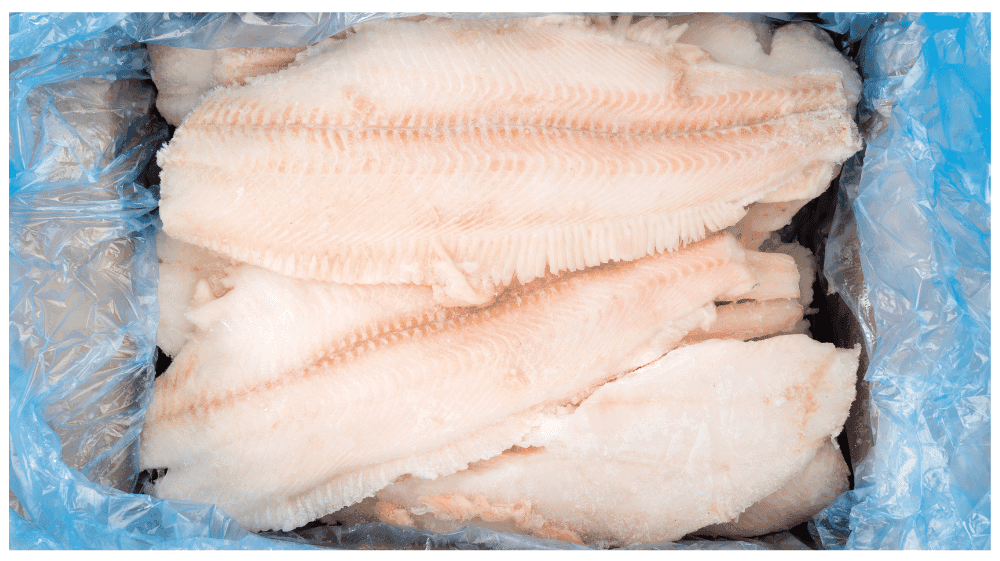
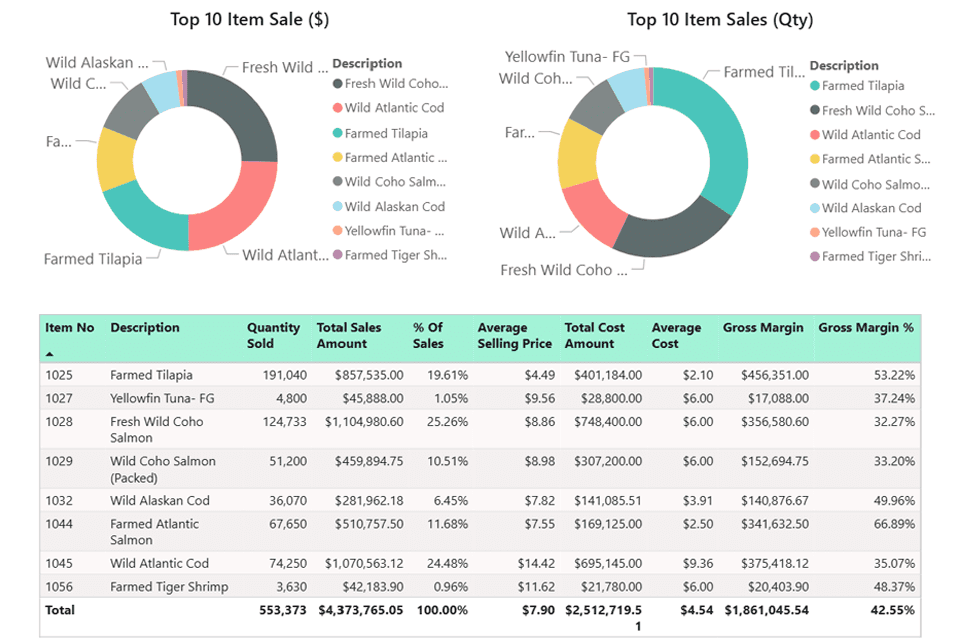
Frozen fish, meat, and poultry are priced per pound and handled by the case, and no scale agrees with the case count. Glazing is standard on frozen seafood, and buyers pay for fish, not ice. inecta Food ERP records both units on every line and tracks the weight a run consumed against the weight it produced.
- Dual units of measure: case counts for handling, actual pounds for cost and invoicing
- Weight capture at receiving, production, picking, and shipping, with per-line variance
- Batch recipe scaling with yield-loss percentages, net weights, and extended costs
- Production worksheets track input weight against output weight for true yield
- Gross-to-net quantity calculation with tare weight deducted at the scale
FSMA 204 AND RECALL READINESS
Freezing changes the temperature, not the regulatory status.
Freezing does not take a product off the Food Traceability List: finfish and crustaceans are listed in fresh and frozen forms, while the kill-step exemption covers many frozen prepared foods. Our FSMA 204 compliance guide walks through the list, the exemptions, and the July 20, 2028 deadline, and our food traceability software page covers the full KDE and CTE model.
- Finfish, crustaceans, and smoked finfish remain on the Food Traceability List in frozen form
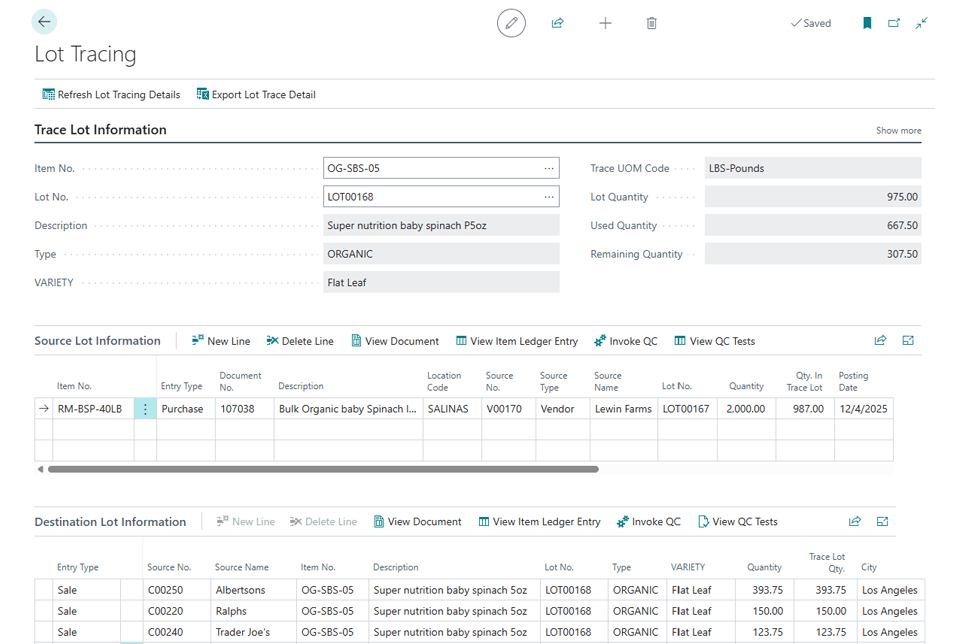
- Part of FSMA FTL item flag, so KDE capture follows covered products automatically
- Key Data Elements recorded at the receiving, transformation, and shipping events
- Forward and backward trace from any lot in a single query

IMPORTS AND COLD-CHAIN DISTRIBUTION
Landed cost gets decided at the receiving dock.
Much of the frozen business lands in containers, and the numbers recorded at the dock are the numbers the system runs on. inecta Food ERP receives containers against purchase orders with lot attributes captured at the dock, generates export documents through the transportation management workflow, and runs plant freezers on FEFO and directed picks through the warehouse management module.
- Import container receiving against purchase orders, with lot attributes at the dock
- Freight, duty, and handling allocated to lots for true landed cost
- Outbound 3PL shipments cleared by release forms tied to sales orders
- Destination-country export documents generated through the transportation workflow
FROZEN SUB-VERTICALS INECTA SUPPORTS
One platform across the freezer aisle
Frozen is a storage state as much as an industry, and most frozen operators also belong to a parent vertical. The cards below link to the vertical pages that go deeper.
Frozen seafood
Fillets, portions, and shellfish with catch weight across the chain, First Land-Based Receiver capture for FSMA 204, and long-horizon FEFO through cold storage. The seafood page covers catch intake to distribution.
Frozen meat and poultry
Variable-weight cases priced per pound, input and output weights through further processing, and lot dates that hold across freeze, storage, and shipment. Covered in depth on the meat processing page.
Frozen fruits and vegetables
IQF packs bought in a harvest season and consumed across the year, lot attributes carried from the field, and FEFO across long storage horizons. The produce page covers the grower and packing side.
Frozen bakery and dough
Frozen dough, par-baked, and thaw-and-sell programs, with lot attributes for freeze date and par-bake state. The bakery page owns this segment in depth.
Prepared meals and entrées
Multi-component recipes where a single fresh FTL ingredient pulls a finished SKU into FSMA 204 scope. Allergen attributes inherit from every input, and same-form rules decide which items stay on the list.
Ice cream and frozen desserts
Dairy-based production with recipe scaling, allergen control across milk, egg, and nut inputs, and frozen distribution. The dairy page covers FMMO pricing and the rest of the dairy stack.
FREQUENTLY ASKED QUESTIONS
Common questions about frozen food ERP software
Frozen food ERP software is an enterprise resource planning system built for companies that process, pack, store, and distribute frozen food. It covers lot and date tracking across long shelf lives, FEFO picking with expiry validation, catch weight on variable-weight items, third-party cold-storage documentation, FSMA 204 traceability, and EDI for retail and foodservice programs. inecta Food ERP delivers this on Microsoft Dynamics 365 Business Central.
The warehouse picks First-Expired-First-Out against each lot's expiration date rather than receipt order, and pick-time validation stops any lot that would expire before its ship date. Shelf-life rules per SKU and per customer mean an account requiring 90 days on arrival never receives a 60-day pallet. Selling an expired lot requires a specific setting, and pick expiry overrides are granted per user.
Yes: catch weight items carry dual units of measure, a case count for handling and an actual weight for cost and invoicing, captured at receiving, production, picking, and shipping. A case of frozen fillets is picked as one case and invoiced at its actual pounds. The same weight data feeds production yield and batch recipe scaling.
For several categories, yes: the Food Traceability List includes finfish and crustaceans in fresh and frozen forms, plus refrigerated and frozen smoked finfish. The kill-step provision exempts many frozen prepared foods (a pizza with cooked tomato sauce is off the list; the same pizza with diced fresh tomato is in scope), and the rule takes effect July 20, 2028. inecta Food ERP flags FTL items and records the required Key Data Elements at receiving, transformation, and shipping.
Yes. Product at a 3PL freezer is received, held, and released through documented forms tied to your purchase and sales orders, so the ERP stays the system of record for inventory you do not operate. Pick instructions capture 3PL freezer lot numbers, and the document-based cycle works with any cold-storage provider without an integration project.
Containers are received against purchase orders, with lot attributes such as production date, expiration date, and country of origin recorded at the dock. Freight, duty, and handling charges are allocated to the lots they belong to, so each lot carries a true landed cost and margin holds at the SKU level. For export shipments, destination-country documents are generated through the transportation management workflow.
A single-facility processor or distributor typically goes live in four to six months; multi-facility operations spanning processing, plant freezers, third-party cold storage, and distribution take six to twelve. Projects run in phases from discovery through configuration, data migration, training, parallel testing, and go-live. inecta's implementation team works exclusively in food and beverage, so configuration draws on prior cold-chain projects rather than generic ERP playbooks.
Business Central gives food companies a cloud ERP platform Microsoft maintains and updates continuously, with finance, inventory, purchasing, sales, Power BI, and Microsoft 365 integration on Microsoft Azure. inecta builds the frozen-specific layer on top: lot date tracking, FEFO with expiry validation, catch weight, cold-storage forms, and FSMA 204 traceability. The platform stays with Microsoft and the food work stays with inecta, backed by 25+ years in food and beverage and a 99% customer retention rate.
RELATED SOLUTIONS
Where frozen food operators usually go next
Seafood ERP Software
Catch intake, catch weight across the full chain, SIMP documentation, and FSMA 204 compliance for fresh and frozen seafood operations.
Learn more →Meat Processing Software
Yield visibility from primal to retail cut, variable-weight pricing, and USDA compliance for meat and poultry processors.
Learn more →Warehouse Management System (WMS)
FEFO controls, license plates, directed picking, and real-time inventory from the receiving dock to the shipping door.
Learn more →Food Traceability Software
FSMA 204 KDE and CTE capture, forward and backward lot recall, and audit-ready traceability for FTL-flagged frozen products.
Learn more →Food ERP
The complete food and beverage ERP, one system for purchasing, production, inventory, and finance.
Learn more →Ready to see frozen food ERP software built for shelf life, catch weight, and cold storage?
Book a discovery call. inecta Food ERP runs lot and date tracking, FEFO with expiry validation, catch weight, third-party cold-storage documentation, FSMA 204 traceability, and EDI on Microsoft Dynamics 365 Business Central.