
Seafood AI Agents 101: How Purpose-Built Automation Handles the Data Standard ERPs Can't

TL;DR: Seafood operations run on data that doesn't fit a database. Catch registers arrive as text messages from vessels. Offload reports come in as emailed PDFs. Orders show up handwritten, sometimes in Chinese. Standard ERPs can't process any of it, which means hours of manual transcription every week before the data is even usable. inecta's seafood AI agents understand this freeform information natively, with vessel, trip, catch register, and quota context built into the platform. Vessel data flows directly into production worksheets. Handwritten offloads become clean sales orders and cut sheets. The transcription bottleneck disappears, and your team gets back to running the operation.
The seafood data problem nobody else has
Every industry has messy data. Seafood has a uniquely messy version of it.
A vessel comes off a trip. The captain texts the catch register from a phone on the dock. A processor offloads totes. The offload report is emailed as a PDF with handwritten weights in the margins. A customer in Asia places an order. It arrives by email with a handwritten note in Chinese listing the cuts and quantities. None of this is structured data. None of it lives in a clean spreadsheet. All of it is operationally critical, and all of it has to be in your ERP before you can run production, post inventory, or invoice the customer.
The standard response, across most of the industry, is to assign people to retype it. A junior staff member reads the text message and enters the catch into the production worksheet. An AP clerk opens the PDF, reads the offload weights, and types them into Business Central. A customer service rep translates the handwritten Chinese order, interprets the cut specifications, and creates the sales order and cut sheet by hand.
It works. It also costs hours every week per role, introduces transcription errors at every step, and slows the entire operation down to the speed of the slowest re-typist.
Why standard ERPs can't solve this
The reason this work is still being done by hand is structural. Standard ERPs (and even most "manufacturing" ERPs adapted for food) are built around the assumption that data arrives in structured formats: EDI, CSV imports, structured forms, validated fields. Anything outside that lane has to be normalized before the ERP can do anything with it.
The normalization step is where the transcription bottleneck lives. The data exists. The ERP exists. The bridge between them is a person.
Bolt-on OCR tools and EDI integrations help at the edges, but they break the moment a vendor changes a PDF layout, a vessel uses a different shorthand, or a customer writes in a non-Latin script. The exceptions become the rule, and the exceptions still go through a human.
Why generic AI can't solve it either
The other obvious answer, in 2026, is to throw AI at the problem. Generic AI tools can read a text message. They can extract weights from a PDF. They can translate handwritten Chinese into English.
What they can't do is post a production worksheet against the right trip, allocate offload weights to the correct lot under your catch-weight rules, or create a sales order with the cut sheet specifications your fab floor actually uses. Generic AI is a translator, not an operator. It reads. It drafts. It hands the output back to a human, who still has to enter it into the ERP.
For a seafood operation, that's a partial win at best. The reading part of the bottleneck moves to AI. The entering part stays with the staff.
What seafood AI agents actually do
inecta's seafood AI agents are designed to operate against the inecta Food backend with seafood industry context built in. That means an agent doesn't just read a vessel text message. It understands that the text represents a catch register, ties it to the correct trip, applies catch-weight rules, and writes the production worksheet directly. It doesn't just extract weights from an offload PDF. It allocates them to the right lot, applies quota and FSF logic, and creates the inventory record. It doesn't just translate a handwritten order. It maps the cut specifications to your existing item catalog, creates the sales order with correct dimensions and approvals, and generates the cut sheet ready for the fab floor.
The agent acts through the ERP, with the same validation, dimension requirements, and audit logging as a human user. Every action is logged. Every error is surfaced. Permission control is entity-level, so an offload agent has no access to customer pricing and a sales agent has no access to vessel quota data.
This is the difference between an AI assistant and an AI operator. An assistant tells your staff what the message said. An operator does the work.
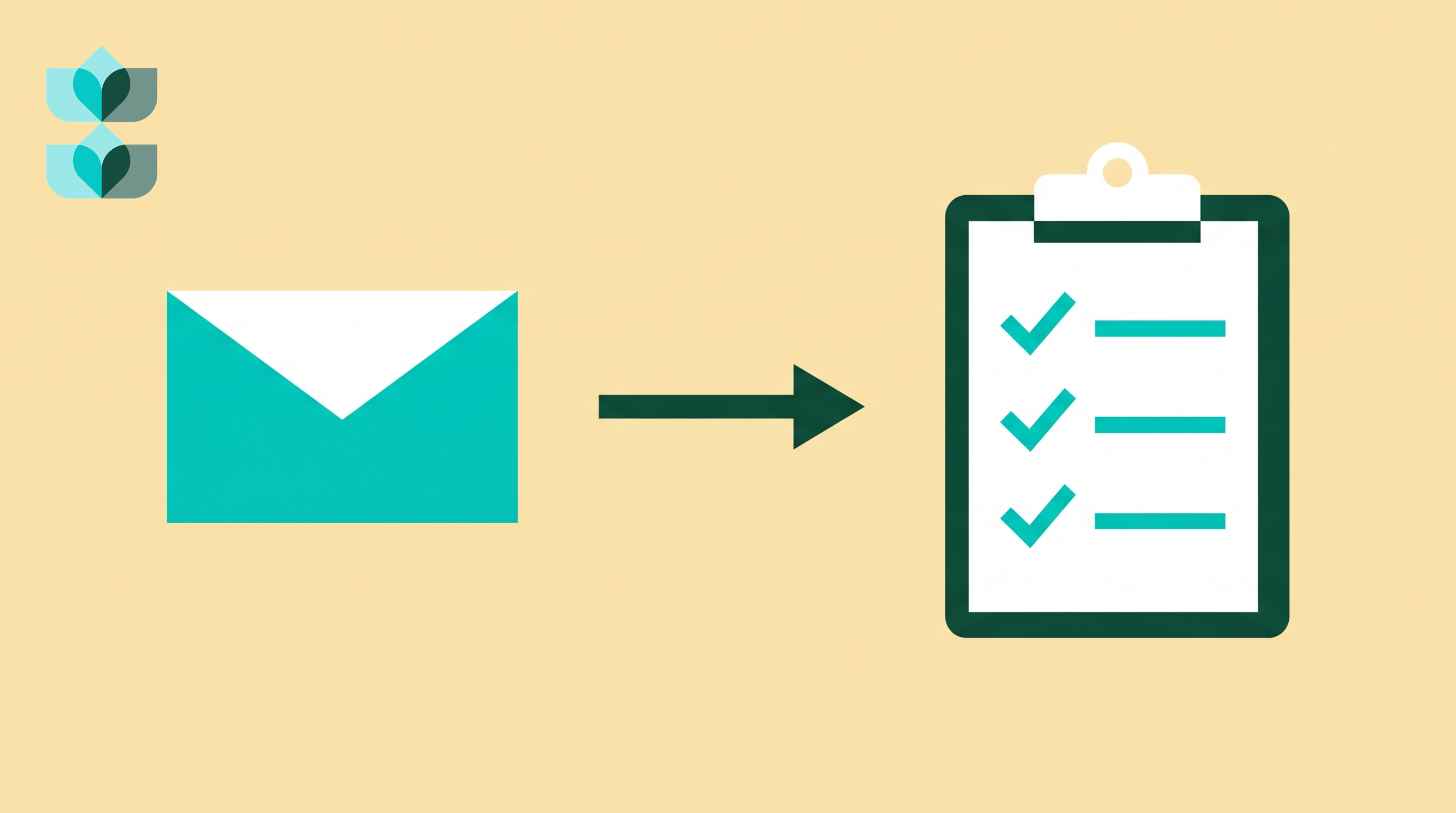
The hidden cost of the transcription bottleneck
For a leadership team, the cost of manual transcription shows up in four places, and rarely on a single line of the P&L.
Labor hours that don't move the operation forward. Every hour spent retyping a catch register or an offload PDF is an hour not spent on production planning, customer service, or yield analysis. The work is necessary, but it's not value-add.
Transcription error rates. Hand-keyed weights, dates, lot numbers, and cut specifications introduce errors that compound downstream. A wrong weight on an offload becomes a wrong inventory position becomes a wrong invoice. The cost of finding and correcting the error is always higher than the cost of preventing it.
Operational lag. A vessel that lands at 6 a.m. shouldn't be waiting until 10 a.m. for someone to retype the catch register before production can start planning. Every hour of transcription delay is an hour the floor isn't running on current data.
Staff retention. The work of manual data entry is the work people are least willing to do and most expensive to retain. The roles that handle transcription are also the roles with the highest turnover, and every turnover cycle restarts the training curve.
How inecta does it differently
inecta AI Agents run natively against the inecta Food data model. That data model includes lot traceability, catch weight, vessel and trip data, quota management, FSF logic, recipe management, and production BOMs, all of which an agent can read and write against directly. There's no translation layer. There's no integration project.
A new agent is a UI configuration task, not an engineering project. Agent instructions are written in plain English in the admin UI. Most inecta Food customers can have their first seafood agent running production work within a week.
The platform runs on a per-tenant subscription with prepaid usage on top, structured like a prepaid SIM. You buy a usage balance, agents draw down against it as they run, and if the balance hits zero, the agents pause until topped up. No per-agent upcharges. No overage billing. No surprise invoices.
The question for seafood operators
The question worth asking, as a seafood operator evaluating where AI fits in your operation, isn't whether AI can read a vessel text or translate a handwritten order. Plenty of tools can. The question is whether the AI you're evaluating actually understands your data model well enough to operate against it.
How many hours per week is your seafood processing team spending on data entry that a seafood-aware AI agent could handle automatically? The answer, for most operations, is the difference between a finance line you'll never recover and a process bottleneck you've already removed.