
CONFECTIONERY ERP
Confectionery ERP software for candy and chocolate manufacturers
inecta Food ERP runs recipe and batch scaling, Big 9 allergen segregation, lot traceability, seasonal demand planning, retailer EDI, and batch costing for candy and chocolate plants. Built on Microsoft Dynamics 365 Business Central, so production, the QA lab, and finance share one record.


WHY GENERIC ERP FAILS CONFECTIONERY MANUFACTURERS
Five places standard ERP breaks down on seasonal programs, recipe scaling, allergens, retail EDI, and ingredient costs
Without inecta
- Halloween, Christmas, Easter, and Valentine's Day concentrate the year's volume into a few production windows, and retail programs are committed six to nine months out. Generic ERP plans from sales history, which knows nothing about programs already booked
- A recipe that behaves in a 50-pound pilot batch has to hold at line volume, and generic ERP hands the scale-up to a spreadsheet where one wrong cell shifts flavor, texture, and cost
- Milk, peanuts, tree nuts, and soy run through most of a confectionery catalog, and shared depositors and enrobers run allergen and allergen-free SKUs in the same week. Generic ERP has no lot-attribute gate between runs
- Grocery and mass retail run on EDI, promotions change the price by week and banner, and deductions land months after the display ships. Generic ERP leaves the order desk re-keying portals and reconciling chargebacks by hand
- Cocoa and sugar move hard between contract cycles, and a standard cost set in January prices March's batches at January's market. Generic ERP standard costing never catches the spike until the quarter closes
With inecta
- Demand sheets net production needs from sales orders, forecasts, inventory, incoming orders, and safety buffers, then convert into production worksheets. The plan is built from commitments, and the season stops arriving as a surprise
- Recipes scale by batch quantity with yield-loss percentages applied automatically, and net weights and extended costs recalculate per line. One recipe record covers the pilot batch and the production run
- Big 9 allergens recorded as lot attributes at receiving and inherited through production. Run sequencing and case-label warnings come off the lot record, and the allergen-free claim is backed by data
- EDI 850, 855, 856, and 810 documents flow through the tenant production runs on. Orders, acknowledgments, ASNs, and invoices come from one record, the first defense against deductions
- Batch costing carries actual ingredient costs into every production order, and margin by SKU and customer shows what the batch cost while there is still time to reprice
0%
Customer retention rate
0+
Years in food and beverage
0+
Food industry verticals
0%
Cloud-based on Microsoft Azure
WHAT INECTA CONFECTIONERY ERP DELIVERS
What a candy and confectionery ERP has to cover, on Microsoft Dynamics 365 Business Central
Recipe and batch scaling
Multi-level BOMs for centers, coatings, fillings, inclusions, and finished SKUs. Batch scaling applies yield-loss percentages automatically, recalculates net weights and extended costs per line, and keeps R&D versions separate from the released recipe.
Big 9 allergen segregation
Milk, eggs, peanuts, tree nuts, soy, wheat, sesame, fish, and shellfish recorded as lot attributes at receiving and inherited through production. Case labels carry the right warning automatically, and lot attributes set run order on shared lines.
Lot traceability and mock recall
Forward and backward trace from any lot in a single query, from finished case back to cocoa, dairy, and nut lots, or from a suspect ingredient forward to every shipment it touched. Mock recalls exercise the same query a regulator would.
Seasonal demand planning
Demand sheets net production needs from sales orders, forecasts, inventory, incoming orders, and safety buffers, then convert into production worksheets. Holiday programs are planned from commitments months before the ship window.
Retail and foodservice EDI
Orders, acknowledgments, ASNs, and invoices (EDI 850, 855, 856, 810) post in the tenant production already works in, so a buyer's documents were never re-keyed.
Batch costing and margin
Batch-level costing with planned, actual, and variance by recipe, and contribution margin by SKU and customer from real production data. When the cocoa market moves, the next batch's margin shows it.
RECIPES, BATCH SCALING, AND BOMS
One recipe, every batch size, no drift.
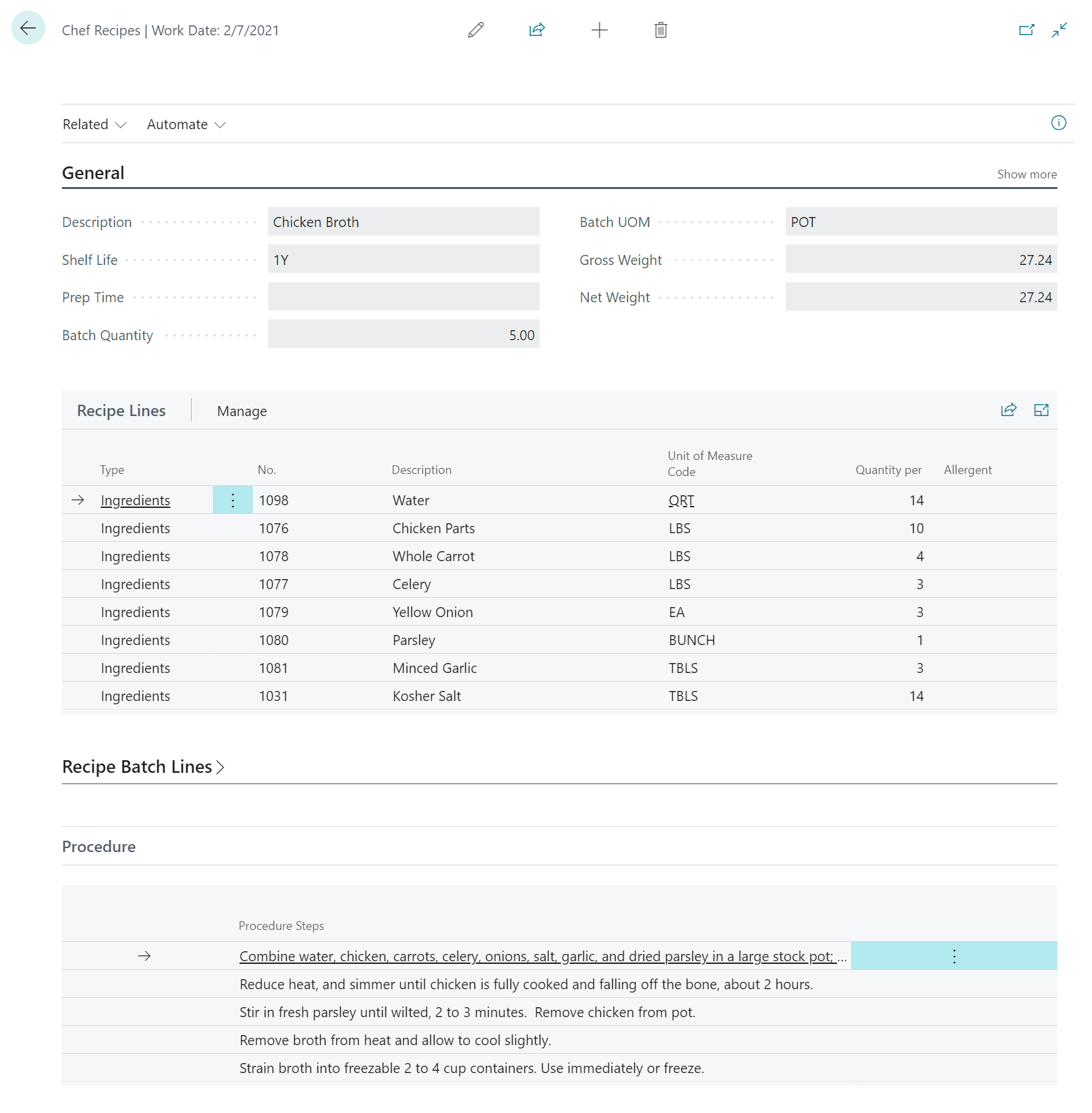
Confectionery recipes are ratio problems: a fondant center, a caramel layer, and a chocolate coating each carry their own bill of materials, stacked into one multi-level SKU. inecta Food ERP scales the whole tree by batch quantity, with yield-loss percentages applied automatically and net weights and extended costs recalculated per line.
- Multi-level BOMs for centers, coatings, fillings, inclusions, and finished SKUs
- Batch quantity scaling with automatic yield-loss calculations per line
- Net weights and extended costs recalculated at every batch size
- Recipe versioning keeps R&D iterations separate from released recipes
- Planned versus actual consumption by batch, tied to the raw lots that ran
SEASONAL DEMAND PLANNING AND SCHEDULING
Halloween is planned in June, not discovered in September.
A seasonal candy program is sold long before it is made: Halloween commitments land in spring, and Valentine's programs are booked before Christmas ships. inecta Food ERP plans from the order book rather than sales history, running the standard workflow inside our food manufacturing software against the season's demand.
- Net production needs from sales orders, forecasts, inventory, incoming orders, and safety buffers
- Demand sheet entries convert into production worksheets with consumption and output entries
- Supply and demand board with direct purchase order creation on one screen
- Forecasts and booked programs feed the same calculation months ahead
ALLERGEN CONTROL AND QUALITY ON SHARED LINES
The changeover decision runs on lot data, with evidence behind it.
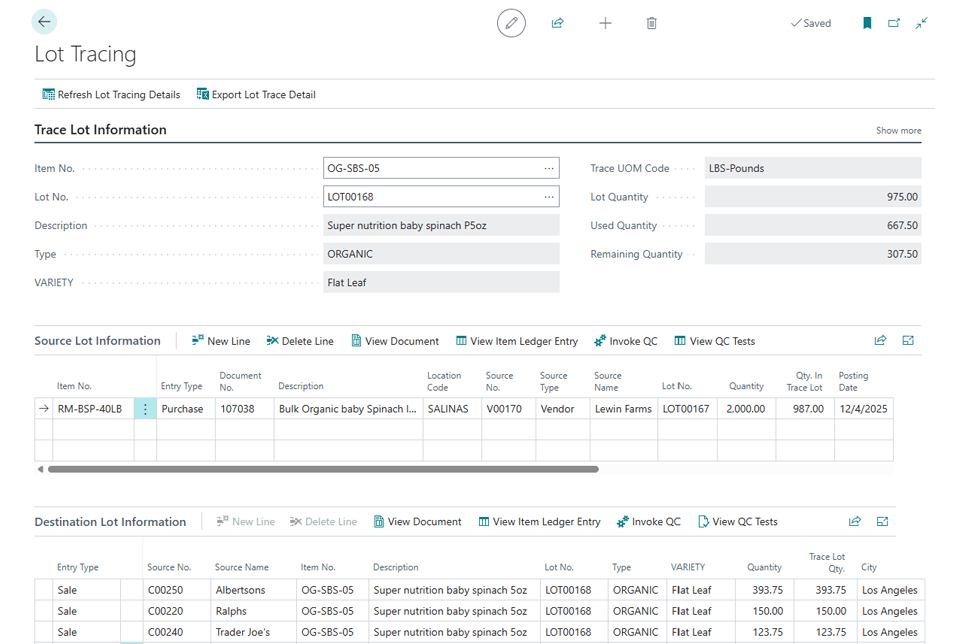
Nearly every confectionery plant runs allergen and allergen-free product across shared equipment, and the changeover between runs is a food safety decision. inecta Food ERP records the Big 9 allergens as lot attributes at receiving and inherits them through production, the same model our bakery ERP customers run; the full recall model is on our food traceability software page.
- Big 9 allergens as lot attributes, inherited from raw materials to finished lots
- Case-label allergen warnings driven by what the batch actually contained
- QC sample statuses: Not Started, Processing, Passed, Warning, Failed
- Non-conforming lots blocked from sale until quality releases them
- Certificates of Analysis attached to sales orders automatically
RETAIL EDI, PROMOTIONS, AND BATCH COSTING
The promotion is profitable until the chargeback says otherwise.
Promotions carry confectionery volume, and every end cap adds a price window and a paper trail that reconciles months later. inecta Food ERP runs EDI 850, 855, 856, and 810 transactions through the Business Central tenant production posts to, so documents come from one record and the mismatches behind many deductions never get created.
- EDI 850 / 855 / 856 / 810 for orders, acknowledgments, ASNs, and invoices
- Orders, ASNs, and invoices generated from one record, in one tenant
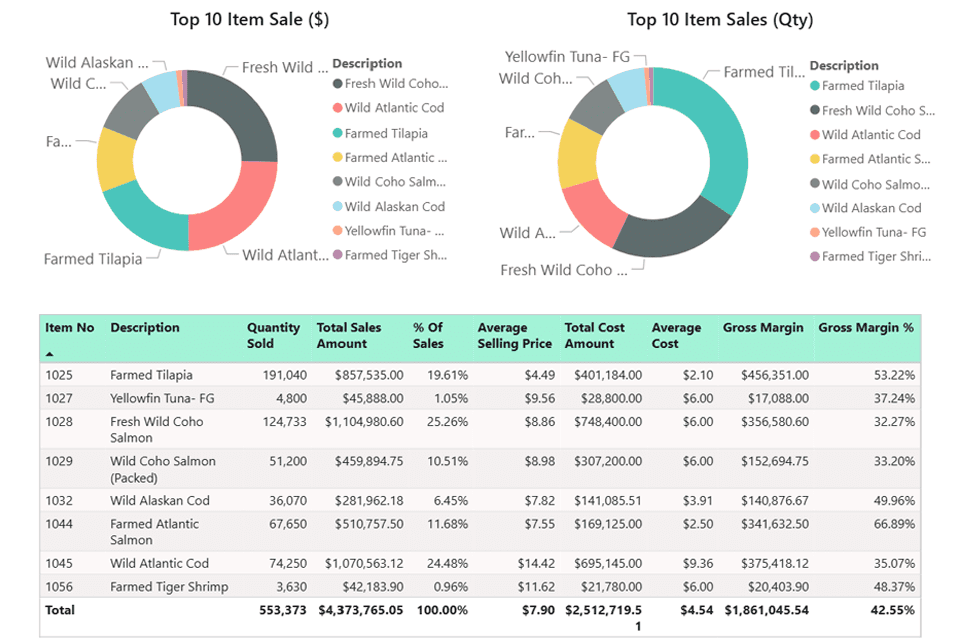
- Batch-level costing with planned, actual, and variance by recipe
- Contribution margin by SKU, customer, and channel from real production data
CONFECTIONERY SEGMENTS INECTA SUPPORTS
One platform across the candy aisle
Confectionery is one category with very different floors. Panning, enrobing, depositing, and starch molding each shape the schedule, and the segments below cover how one platform shows up in each.
Chocolate and chocolatiers
Bean-to-bar, melt-and-mold, and enrobed lines with multi-level recipes for centers, ganaches, and assortments. Dairy and nut allergens sit on nearly every lot, and fourth-quarter assortments multiply SKUs faster than recipes.
Hard candy and lollipops
Cooked-sugar production in long runs, where color and flavor changeovers segment the schedule. Batch scaling with yield-loss percentages decides whether a high-volume, low-price SKU makes money.
Gummies and chews
Starch-molded and deposited formats on gelatin and pectin bases. Product waits in the starch room between depositing and packaging, and every lot holds its identity across that gap.
Seasonal and holiday programs
Programs committed months out, planned through demand sheets and production worksheets before the season starts.
Private label and co-pack
Customer-specific recipes, packaging variants, and label requirements per brand, with batch costing that shows what each co-pack contract returns.
Snack and nutrition bars
Bar lines share confectionery's allergen density and recipe math: nut and dairy inputs, coatings, and inclusions. Cookies, biscuits, and snack production are covered on the bakery ERP page.
FREQUENTLY ASKED QUESTIONS
Common questions about confectionery ERP software
Confectionery ERP software is an enterprise resource planning system built for candy and chocolate manufacturers, covering recipe and batch management with seasonal scaling, lot traceability, allergen segregation, and quality control alongside the planning, EDI, and costing work that retail confectionery demands. A candy and confectionery ERP is specific where generic ERP is not: batch-quantity recipe scaling, Big 9 allergen attributes on every lot, demand planning from booked programs, and batch costing that follows ingredient markets. inecta Food ERP delivers this on Microsoft Dynamics 365 Business Central.
Recipes are stored once and scaled by batch quantity: set the batch size and yield-loss percentages apply per line, with net weights and extended costs recalculated automatically. A 50-pound pilot batch and a holiday-volume batch are two quantities of one recipe, which retires the scale-up spreadsheet. Recipe versioning separates development from the released recipe, and planned versus actual consumption shows where a scale-up moved.
The nine FDA major allergens (milk, eggs, peanuts, tree nuts, soy, wheat, sesame, fish, and shellfish) are recorded as lot attributes at receiving and inherited through production into finished lots. Case labels automatically carry the warning that matches what went into the batch. On shared depositors and enrobers, those attributes decide what runs after what, and an allergen-free claim traces to the lots behind it.
Yes. The demand sheet nets everything booked and forecast against on-hand and inbound inventory plus safety stock, and converts the gap into production worksheets. A Halloween program booked in spring enters the plan as soon as its orders exist, and ingredient shortages surface on the supply and demand board, where purchase orders are created directly.
Every lot keeps its identity from receiving through production to shipment, with input and output lots linked at each production order. A trace runs both directions, backward from a finished case to its ingredient lots and forward from a suspect ingredient to every shipment it touched. The query that answers a regulator is the same one a mock recall exercises, and it runs in minutes from postings the plant already makes.
Yes for the document flow: orders arrive as EDI 850s, acknowledgments return as 855s, and the 856 ASN and 810 invoice follow the shipment, all in the Business Central tenant where production and inventory post. Documents generated against one record remove the mismatches that drive paperwork deductions, and chargebacks that do arrive land against invoices already in the receivables ledger. inecta keeps the paper trail accurate enough to check every deduction against what shipped.
A single-plant confectionery manufacturer typically goes live in four to six months; multi-site operations spanning manufacturing, co-pack partners, and distribution usually run six to twelve. The phases are consistent (discovery, configuration, data migration, training, parallel testing, and go-live), and seasonal businesses schedule the go-live after the season ships, never inside the ramp. inecta's implementation team works exclusively in food and beverage.
Several food ERPs are built on Microsoft Dynamics 365 Business Central and are equivalent at the platform level; the differences are focus and depth. inecta has worked exclusively in food and beverage for 25 years, holds a 99% customer retention rate, and runs 20+ food verticals on one product rather than separate industry editions. The US implementation team has taken manufacturers live across bakery, snacks, and dairy, where confectionery's patterns repeat.
RELATED SOLUTIONS
Where confectionery manufacturers usually go next
Bakery ERP Software
Cookies, biscuits, snacks, and oven-based production: recipes, allergens, EDI, DSD routes, and FSMA 204 for commercial bakeries.
Learn more →Food Manufacturing Software
The broader manufacturing module: recipes, BOMs, batch production, demand planning, and traceability across every food vertical.
Learn more →Food Traceability Software
Forward and backward lot recall, FSMA 204 KDE and CTE capture, and audit-ready traceability on one lot record.
Learn more →Food ERP
The complete food and beverage ERP: purchasing, production, inventory, distribution, and finance on one system.
Learn more →Warehouse Management System (WMS)
FEFO picking, directed put-away and pick, license plates, and real-time inventory from the receiving dock to the shipping door.
Learn more →Ready to see confectionery ERP software built for seasonal peaks, allergens, and recipe scaling?
Book a discovery call and see recipe scaling, allergen segregation, demand planning, EDI, and batch costing on Microsoft Dynamics 365 Business Central.