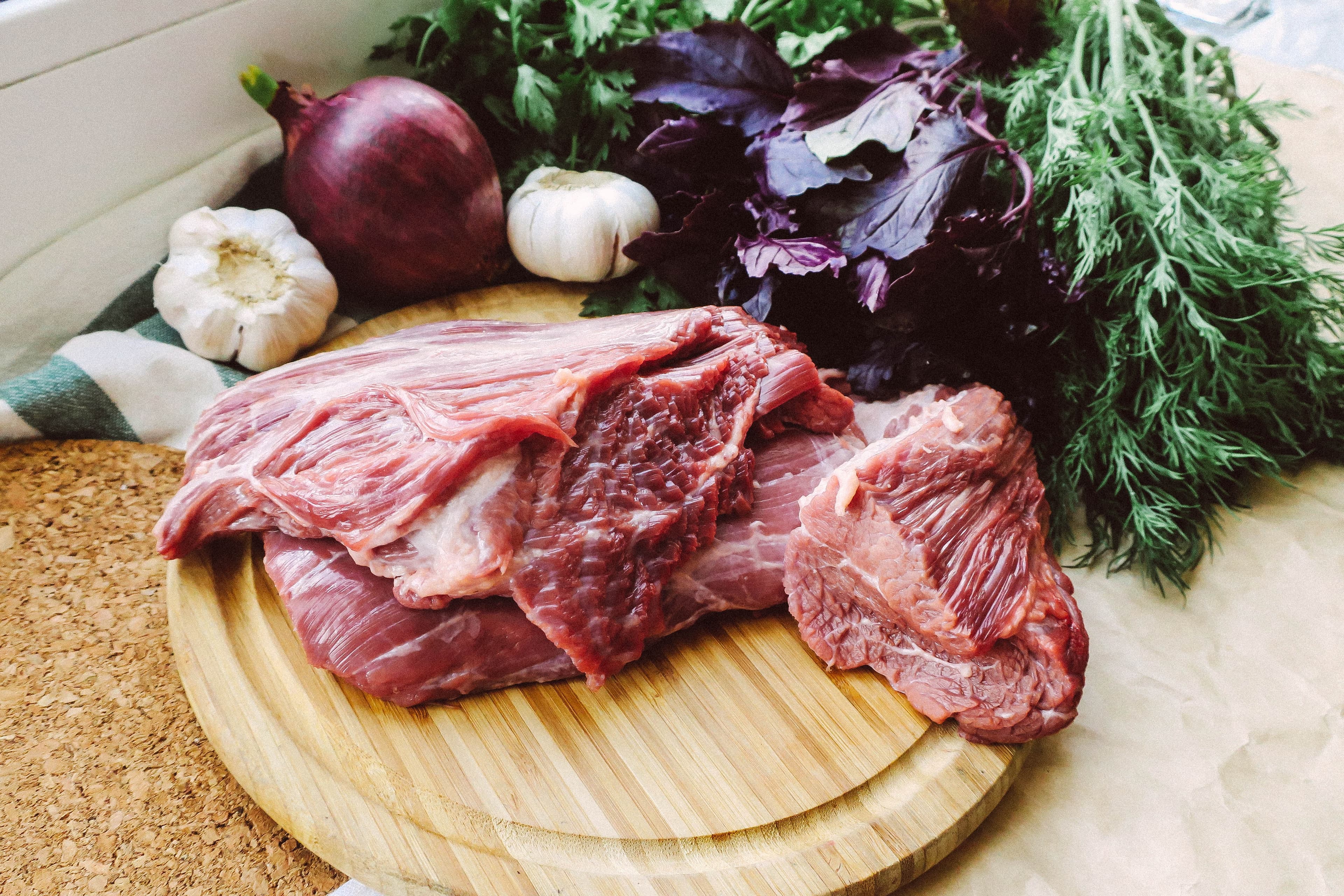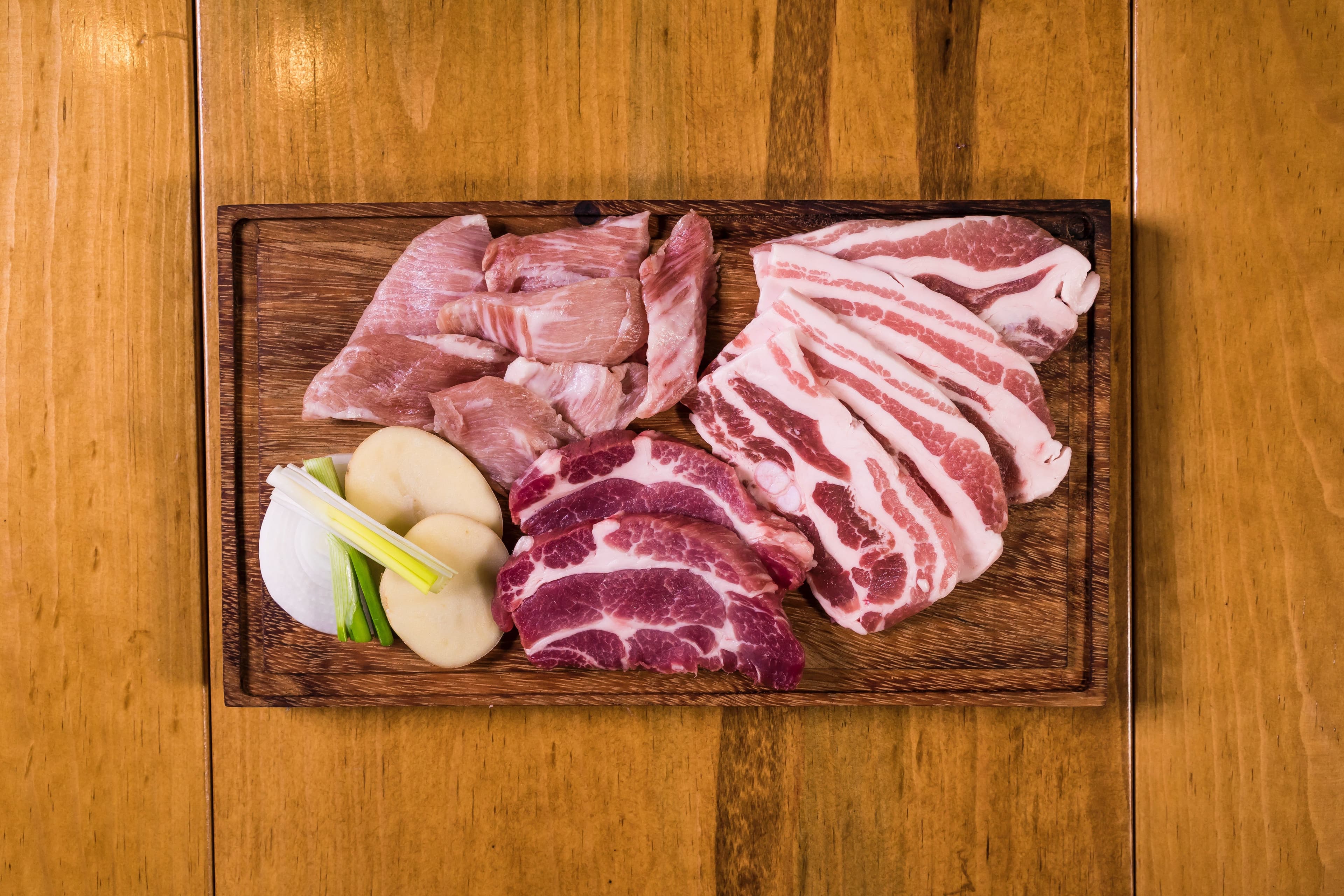
Why Mid-Market Meat Processors Are Still on QuickBooks and Spreadsheets

TL;DR
Some of the most respected names in American meat: high-end butchers supplying Michelin kitchens, the wagyu programs shipping nationally, the boutique processors with celebrity-chef followings, many run businesses at $30M to $150M in revenue on QuickBooks plus a thicket of spreadsheets. It looks like an oversight from the outside. It isn't. The reason is structural: generic ERPs don't model how meat actually works (catch weight, yield, primal-to-portion breakdowns, USDA traceability, halal/kosher certification, allergen control), so the switch from QuickBooks to a generic Tier 1 ERP has historically delivered more pain than value. That math has shifted. This article explains why mid-market meat processors stayed put for so long, what specifically breaks first as they scale, and what changed in the food-ERP category in the last few years.
The short answer
Mid-market meat processors stay on QuickBooks and spreadsheets because generic ERPs were built for fixed-weight, fixed-BOM, fixed-cost manufacturing and meat is none of those things. A side of beef weighs what it weighs, breaks down into dozens of cuts at varying yields, sells in catch-weight cases, and has to be traceable from animal ID to invoice line. QuickBooks doesn't pretend to handle that, so processors patch around it with Excel. A generic ERP does pretend to handle it, fails halfway through implementation, and burns $500K to $2M proving it. Staying on QuickBooks until a true food-specific system is available has been, until recently, the rational choice.
The shape of the problem
To understand why a $75M wagyu program or a $40M dry-aged beef supplier might still close the month in Excel, you have to understand what a meat processor's day actually looks like.
A mid-market meat operator typically:
- Buys primals or sides by actual weight, not unit count, every receipt is a different number.
- Breaks those primals down into dozens of SKUs at variable yields that depend on the animal, the breed, the season, and the butcher on shift.
- Sells in catch-weight cases where the customer is invoiced for the actual weight shipped, not a standard count.
- Carries dual costs, the cost of the input animal and the allocated cost of every cut derived from it.
- Must trace every cut back to a lot, supplier, slaughter date, and often a specific animal, on demand, for USDA, FSIS, customer, or recall purposes.
- Manages certification stacks, USDA grading, organic, grass-fed, halal, kosher, antibiotic-free, country-of-origin, that drives both pricing and compliance.
- Runs allergen, species, and religious-segregation rules across shared equipment and shared facilities.
- Quotes and prices against commodity index movements (CME live cattle, lean hogs, BLS retail beef) that shift the cost basis daily.
QuickBooks was designed for none of this. Neither was a generic ERP. The spreadsheets exist because the spreadsheets are where the actual business logic lives.
Why QuickBooks is sticky for longer than people think
QuickBooks gets caricatured in ERP sales decks as the system you outgrow at $5M. In food specifically, and in meat especially, it's stickier than that. Three reasons.
1. It honestly admits what it doesn't do
QuickBooks doesn't claim to handle catch weight, yield, traceability, or commodity pricing. Because it doesn't pretend, the team builds workarounds with full knowledge that they're workarounds. The bookkeeper closes the books. Production runs out of Excel. Sales runs out of a second Excel. Inventory is reconciled monthly against a physical count. It's ugly but it's honest, and everyone knows where the truth lives.
2. The Excel layer is genuinely good at meat
Most mid-market meat processors have a senior person, often the founder, the COO, or a long-tenured ops lead who built the spreadsheet stack over a decade. It models yield. It tracks lots. It computes catch-weight pricing. It feeds invoices. It's brittle, it's keyperson-dependent, and it has no audit trail worth the name but it works. Replacing a working Excel stack with an ERP that "doesn't quite get meat" feels, correctly, like a downgrade.
3. The graveyard of failed implementations
Every mid-market meat processor knows another mid-market meat processor that tried to put a generic Tier 1 ERP in and either failed outright or settled for a system that captures finance but leaves production back in Excel. Failure stories travel in this industry. After two or three of them, "we'll wait" becomes the safest answer.
What actually breaks first
Staying on QuickBooks works until it doesn't. The breakage usually shows up in a predictable order. If you recognize three or more of these, you're already past the point where the spreadsheet stack is helping.
- The monthly close stretches past day 15. Reconciling catch-weight invoices, yield variances, and lot-level COGS against QuickBooks becomes the bookkeeper's full-time job, and the answer keeps moving.
- You can't price a new customer in under a day. Quoting a new restaurant or distributor requires pulling yield assumptions, current input costs, freight, packaging, and margin targets from four different spreadsheets owned by three different people.
- A recall drill takes more than four hours. USDA expects "one up, one down" traceability in a defined window. If finding every customer who received product from a specific lot requires a manual pivot-table session, you're carrying real recall risk.
- Margin per cut is a guess. You know your top-line margin. You don't know whether your tenderloin program is subsidizing your ground program, or the reverse, with any precision. This is where the most common silent profit leak in meat lives.
- Adding a customer-specific spec sheet is a project. A new account that wants custom portioning, custom labeling, or custom packaging triggers a week of spreadsheet edits across multiple files.
- Inventory accuracy is below 95%. Physical counts surface ghost inventory, missing inventory, or mislabeled lots every month.
- Your best operator can't go on vacation. The spreadsheet keyperson is the actual system. When they're out, the business slows down.
- A new certification (halal, organic, grass-fed expansion) takes months to operationalize. Because certification rules have to be encoded across multiple disconnected spreadsheets, layering a new program is brittle and slow.
- You can't model "what if cattle moves another 20 cents." Commodity moves hit the business immediately, but the team can't project the margin impact across the assortment without rebuilding the model from scratch.
- Auditors and lenders are asking questions Excel can't answer. Once a processor takes on debt, brings in private equity, or starts exporting, the documentation requirements outgrow what a workbook stack can defensibly produce.

The category that gets stuck
This pattern is most visible in a specific tier of meat processor what you might call the premium mid-market. Operators in this band tend to share a profile:
- Revenue between roughly $25M and $200M.
- A product story strong enough to command premium pricing: dry-aged, wagyu or wagyu-cross, heritage breed, regenerative, halal, kosher, or chef-direct.
- Distribution into restaurants, specialty retailers, and direct-to-consumer, often a blend.
- Strong founder or operator involvement, often with deep butchery or culinary roots.
- A reputation for product quality that runs ahead of operational sophistication.
Names like Pat LaFrieda Meat Purveyors, Mishima Reserve, and Amir Quality Meats are useful as category exemplars, they sit in or near this profile in the public imagination, supplying high-end restaurants and premium retail with differentiated product. They are not the subject of this article and their internal systems are not public; the point is that operators of that shape - premium, mid-market, brand-driven, supplying serious customers are the segment where the QuickBooks-plus-spreadsheets pattern persists longest.
These businesses don't have a technology problem. They have a translation problem: the operational know-how that built the brand lives in people and spreadsheets, and no generic ERP has historically been able to absorb it without diluting it.
Why generic ERPs keep losing this fight
Pick any large horizontal ERP: SAP, Oracle, Dynamics, NetSuite, and you'll find meat processors who tried them and rolled back, or implemented finance only and left production in Excel. The reasons are consistent:
Catch weight isn't a feature, it's an axiom. In a meat ERP, every unit of inventory has both a count and a weight, and every transaction handles both. Generic ERPs treat catch weight as an add-on module or a workaround. The result is a system that's almost right, which in operations is worse than a system that's honestly not-right.
Yield is a first-class object. A primal becomes a dozen cuts plus trim plus fat plus bone, and every one of those has a downstream cost and a downstream destination. Generic ERPs model this as a bill of materials with fixed ratios. Meat doesn't have fixed ratios. The model breaks the first time a butcher's actual cut sheet doesn't match the BOM.
Traceability is regulatory, not optional. USDA, FSIS, FDA FSMA 204, and customer-driven traceability requirements demand lot-level forward and backward tracing on a defined clock. Bolt-on traceability modules tend to capture the data but fail the speed test in an actual recall scenario.
Commodity pricing is the cost basis. Live cattle, lean hogs, and feeder cattle futures aren't background data, they're how cost is set, quotes are built, and contracts are hedged. Generic ERPs treat commodity prices as an external feed, if they treat them at all.
The Excel stack carries irreplaceable IP. A good generic ERP implementation forces a company to fit its process to the software. In meat, the process is the moat. Companies correctly resist implementations that flatten what makes them differentiated.
What changed in the last few years
The QuickBooks-plus-spreadsheets pattern is finally cracking, and it's not because mid-market meat processors got tired of Excel. Three things shifted:
- Food-specific ERPs matured. Purpose-built food-and-beverage ERPs now handle catch weight, yield, traceability, certification, and commodity pricing as native concepts rather than bolt-ons. The implementation no longer requires the customer to rebuild the meat business inside a system designed for discrete manufacturing.
- FSMA 204 raised the floor. The FDA's Food Traceability Final Rule and parallel USDA expectations have made manual lot tracing a documented compliance risk rather than just an operational annoyance. Lenders and insurers are starting to ask, too.
- PE and growth capital arrived in protein. When a mid-market meat brand takes on institutional capital to expand distribution, build a new facility, or acquire a smaller processor, the new board wants real margin reporting, real working capital visibility, and real audit trails. Excel doesn't survive a first board meeting.
The result is that the staying-on-QuickBooks calculus has flipped. For a long time, the cost and risk of switching exceeded the cost and risk of staying. That equation is no longer obvious.
What the switch actually has to deliver
For a mid-market meat processor to move off QuickBooks and spreadsheets, the replacement has to handle, at minimum:
- Native catch weight on receipts, production, transfers, and shipments
- Variable yield modeling with actual-vs-standard variance reporting
- Primal-to-portion BOMs with co-product and by-product costing
- Lot- and animal-level traceability with one-up-one-down within minutes
- Certification and segregation rules (USDA grade, organic, grass-fed, halal, kosher, allergen)
- Customer-specific spec sheets, labels, and pricing
- Commodity index integration for cost basis and pricing scenarios
- Catch-weight invoicing with EDI to major foodservice and retail customers
- Real margin reporting by cut, customer, and program
- An audit trail a USDA inspector, a lender, or a PE board can accept
That's the bar. Anything less and the spreadsheet layer survives in some form, and if the spreadsheet layer survives, the implementation hasn't really happened.
Frequently asked questions
At what revenue level should a meat processor leave QuickBooks? There isn't a clean revenue threshold. Pressure tends to build between $15M and $30M, but the trigger is usually a specific event: a recall scare, a failed audit, a PE investment, a new export program, a major customer demanding EDI catch-weight invoicing, not a number on the P&L. Some operators run to $100M+ on QuickBooks before they switch.
Can QuickBooks handle catch weight at all? Not natively. There are third-party add-ons, and there are creative workarounds involving units of measure, but none of them give you true dual-tracking of count and weight across the whole transaction lifecycle. They patch reporting; they don't fix the underlying model.
Is generic ERP (SAP, NetSuite, Dynamics) better than QuickBooks for a meat processor? Only if the meat-specific functionality is added on top, and only if the team implementing it has done meat before. A generic Tier 1 ERP without a meat-specific layer is often a lateral move, better finance, same Excel layer for production.
What's the difference between a food ERP and a generic ERP with food modules? A food ERP treats catch weight, yield, lot traceability, and certification as native concepts the entire system is built around. A generic ERP with food modules treats them as configurable extensions. The difference shows up most clearly in production, inventory accuracy, and recall response time.
How long does a real meat ERP implementation take? For a mid-market processor, expect six to twelve months for a well-scoped, food-specific implementation. Longer is a warning sign, it usually means the implementer is trying to bend the software to a process it doesn't natively support.
Will we lose the operational knowledge that lives in our spreadsheets? Only if the implementation team treats the spreadsheets as garbage to be replaced. A serious food-ERP implementation treats them as the requirements document, the yield logic, the cut sheets, the pricing rules embedded in those workbooks are the spec for what the new system has to do.
Does this apply outside the US? The specifics shift EU traceability rules, CFIA in Canada, halal supply chains in the Gulf, MPI in New Zealand but the underlying pattern is the same globally. Premium mid-market meat operators everywhere tend to run on accounting software plus spreadsheets until a triggering event forces a purpose-built system.
The bottom line
The QuickBooks-and-spreadsheets pattern in mid-market meat isn't laziness or technical debt. It's a rational response to a market where generic ERPs couldn't model the actual business and food-specific ERPs were, until recently, immature. That window is closing. The operators who built premium brands on the back of a senior person's spreadsheet are facing a new generation of food-specific ERPs that can finally absorb what those spreadsheets know without flattening the product story that made the brand worth building in the first place.
inecta Food is a food and beverage ERP with a dedicated meat and poultry sub-industry product. Catch weight, yield, primal-to-portion, lot traceability, certification, and commodity pricing are native, not bolt-ons. If you're a mid-market meat operator weighing the move off QuickBooks, talk to a team that's done it before in your category.