
Insights and guides for food industry professionals, from ERP implementation to supply chain optimization.

Irrigation is the saving grace for farmers who are victims of uneven amounts of precipitation throughout the growing season. On top of that, only a percentage of the precipitation will be absorbed by the soil, benefiting the potential crop growth.

Does your business software feel like a house you keep adding rooms to? How do you extend without it turning into an eyesore? When you’ve installed basic unmodified Business Central, you have an enormous number of features out of the box. Yet, you might still find the need to add functionality. How you do that can be detrimental.

The ripening process is at the heart of modern produce logistics. From bananas and mangoes to tomatoes and melons, managing ripeness is key to extending shelf life, reducing waste, and ensuring optimal quality at the point of sale.


Microsoft just released a lengthy summarization regarding their April ’19 Update which will have a heavy impact on many of the offerings included in the Microsoft Dynamics 365 canon. We’d like to dissect the update and deliver you the most pertinent information. In terms of Business Central, Sales, Field Service, etc.

VAR selection can be defining decision in the success of an ERP project. With so many VARs to choose from, the decision to choose a VAR based on experience with your industry or their physical location can be difficult.

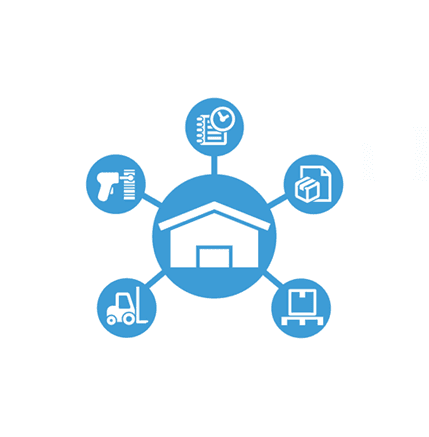
A Warehouse Management System, or a WMS, is essentially software and processes that allow businesses to control and facilitate warehouse operations during the time a good or product is present in the warehouse. Among the myriad of features a WMS offers, it can most importantly offer visibility into the businesses’ inventory. What’s more, a WMS gives you access to this information at any time, from any location. Another major facet to a WMS is its ability to manage supply chain operations from th

To accurately estimate the implementation of a business software is a very tricky task. The consulting industry often estimates about one to one of software cost and service. Which basically means that you end up spending the same amount on service as you will on the software to go live.
Does anyone really know where their lunch comes from? Should we care? Wouldn’t it be nice if we could start recognizing the taste between cod caught in the Atlantic or the Pacific?
Business Central or NetSuite: Which Is Right for You? When considering the differences between Business Central and NetSuite, there are a few things that must be mentioned. Though both are ERP solutions, both serve different purposes, and are appropriate for different businesses depending on their size and industry. With the age of digital transformation currently in progress, this comparison is bound to pop up more often than not. As more and more companies turn to ERP software as means for str

Lot tracking is something that isn’t always easy to understand conceptually, but we want to give it a crack because we here at iNECTA find it very important. Lot tracking is crucial to facilitating a productive distribution process. In order to properly dissect what lot tracking is and what it does, we need to look at the details. Lot tracking is essentially a system that has the ability to properly track product lots from start to finish along the supply chain. You may be asking what a “lot” ac