
Insights and guides for food industry professionals, from ERP implementation to supply chain optimization.
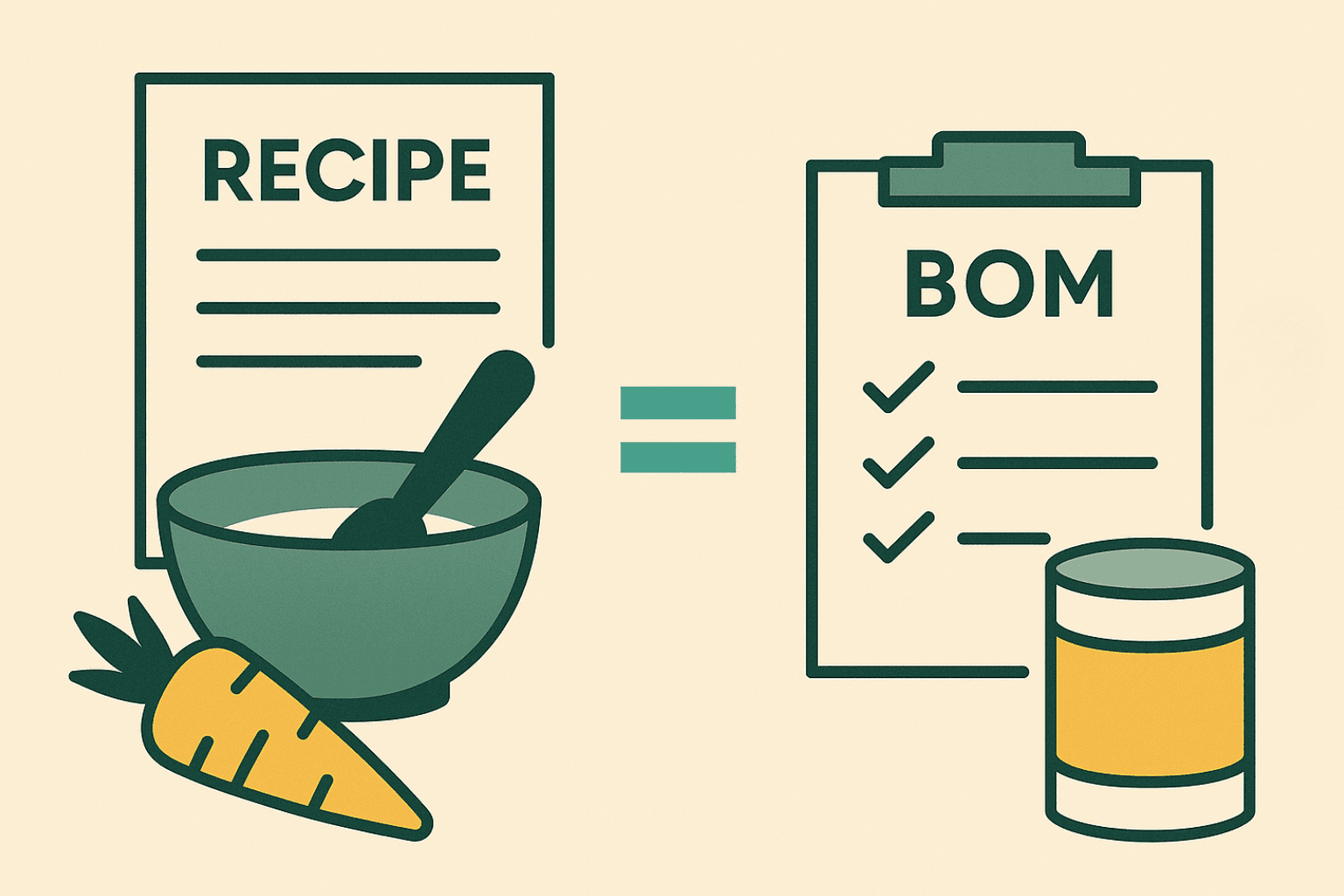
In food manufacturing, consistency isn’t just about taste, it’s about compliance, efficiency, and profitability. Yet many companies still struggle with a persistent challenge: the recipe gap.
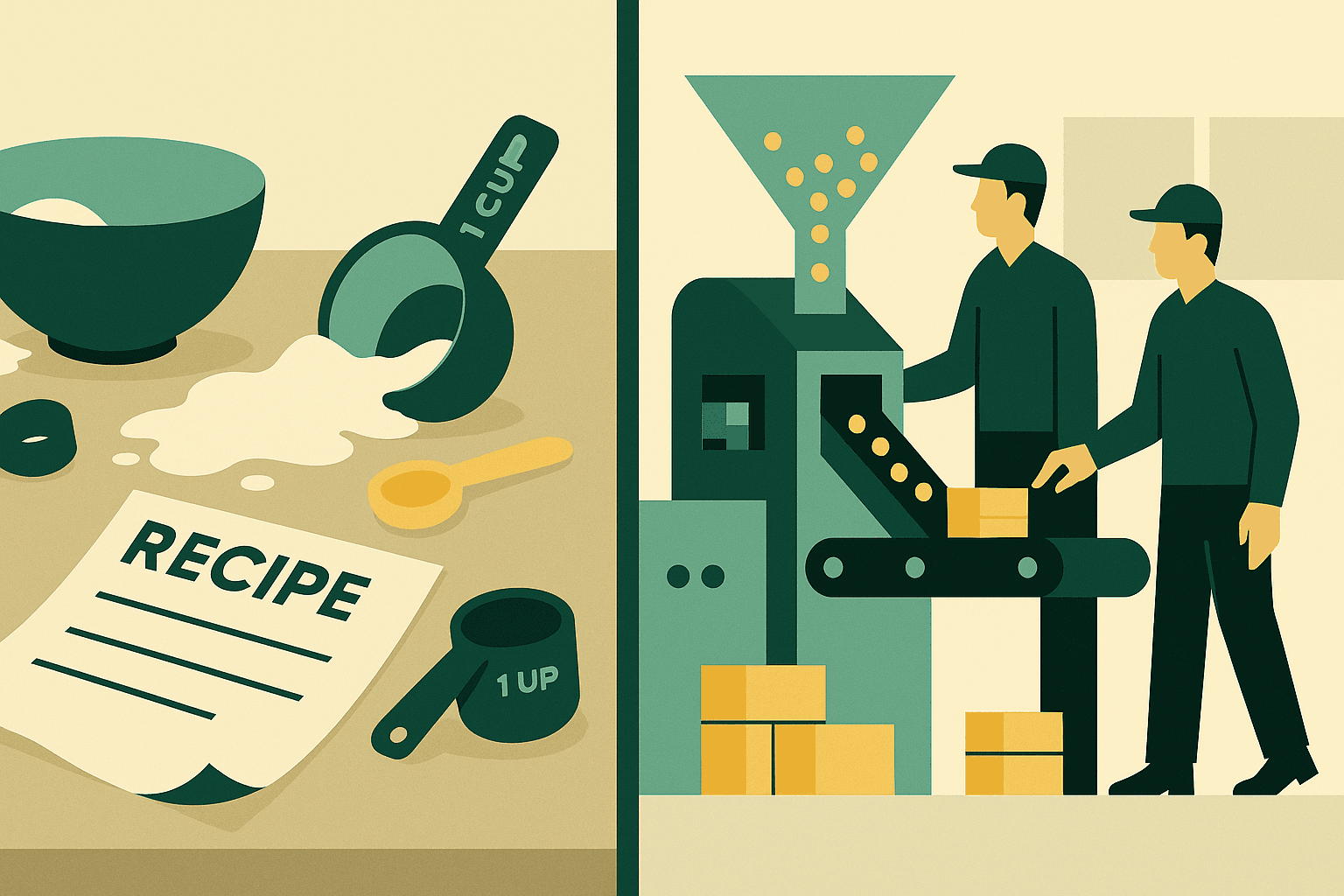
Whether you’re cooking dinner at home or running a food manufacturing facility, one principle holds true: accuracy matters. At the kitchen table, mismeasuring ingredients might just lead to a flat cake. On the factory floor, however, inaccurate recipes and Bills of Materials (BOMs) can snowball into costly production errors, compliance risks, and even dissatisfied customers.

On today’s production floors, time is money and visibility is everything. Yet many food manufacturers are still running operations the old-fashioned way, clipboards, paper travelers, and manual counts. While these methods may feel familiar, they create blind spots, errors, and inefficiencies that eat into margins.

When most leaders think about supply chain performance, they focus on production, inventory, or procurement. But for your customers and regulators, the most visible, and vulnerable, moment of truth comes at the loading dock. Transportation isn’t just moving goods from point A to point B. It’s the point where your operation’s credibility is on display.
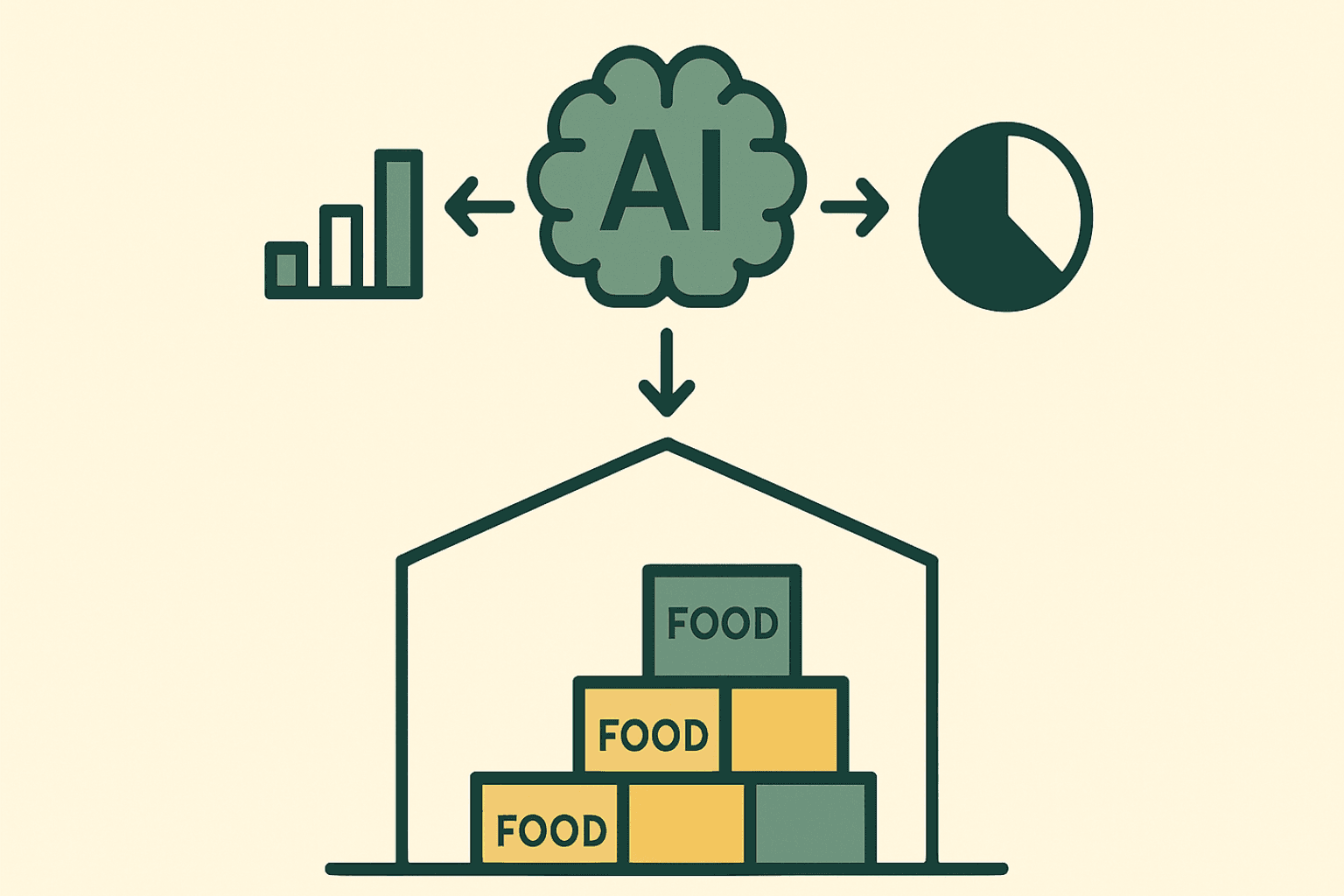
How Smart Traceability Transforms Food ERP from Compliance Tool to Profit Driver In today’s competitive food industry, staying compliant with regulatory requirements is just the baseline. Forward-thinking food businesses are realizing that traceability, once seen as a cost center, is now a strategic asset. But here’s the catch: most companies only use traceability to react after something goes wrong.
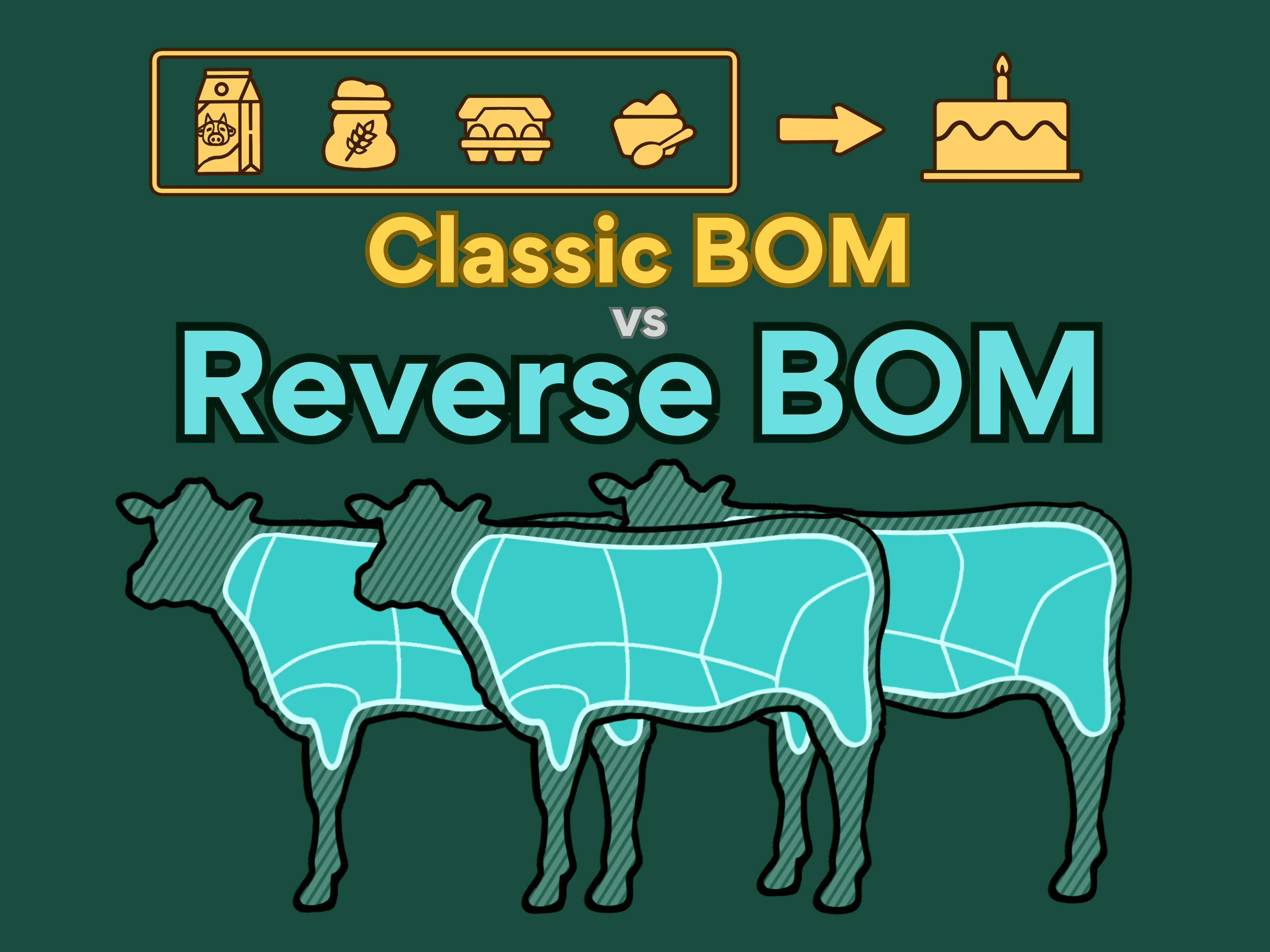
Why Meat Processors Need a Reverse BOM: How to Make It Work For most food manufacturers, a standard Bill of Materials (BOM) is the backbone of production planning. But if you're a meat processor, you've likely discovered that traditional BOMs fall short, often dramatically. Why? Because meat processing doesn't follow the same logic as assembling ingredients into a finished product. Instead, it starts with a single whole input and ends with multiple variable outputs.

Why Traditional BOMs Fail in Protein Processing and How Reverse BOMs Fix It For most manufacturers, a Bill of Materials (BOM) is a foundational concept. It maps out how multiple components come together to form a finished product. But if you work in protein processing, whether that’s seafood, meat, or poultry, this standard model quickly starts to break down.

In food manufacturing, the production floor is the heart of the operation. Every minute counts, every yield matters, and every delay has ripple effects across the supply chain. For COOs, managing this environment without real-time data is like piloting an aircraft with no instruments, you may stay airborne for a while, but the risks are high, and one blind decision could send everything off course.

For decades, food manufacturers have relied on manual methods, clipboards, paper travelers, and whiteboards, to track production. While these tools served their purpose, they create predictable challenges: delays, errors, limited visibility, and stressful compliance reporting.

In today’s food industry, artificial intelligence (AI) is becoming an essential tool for forecasting demand, optimizing pricing, reducing waste, and improving operational efficiency. But here’s the truth few talk about: AI is only as good as the data it’s fed.
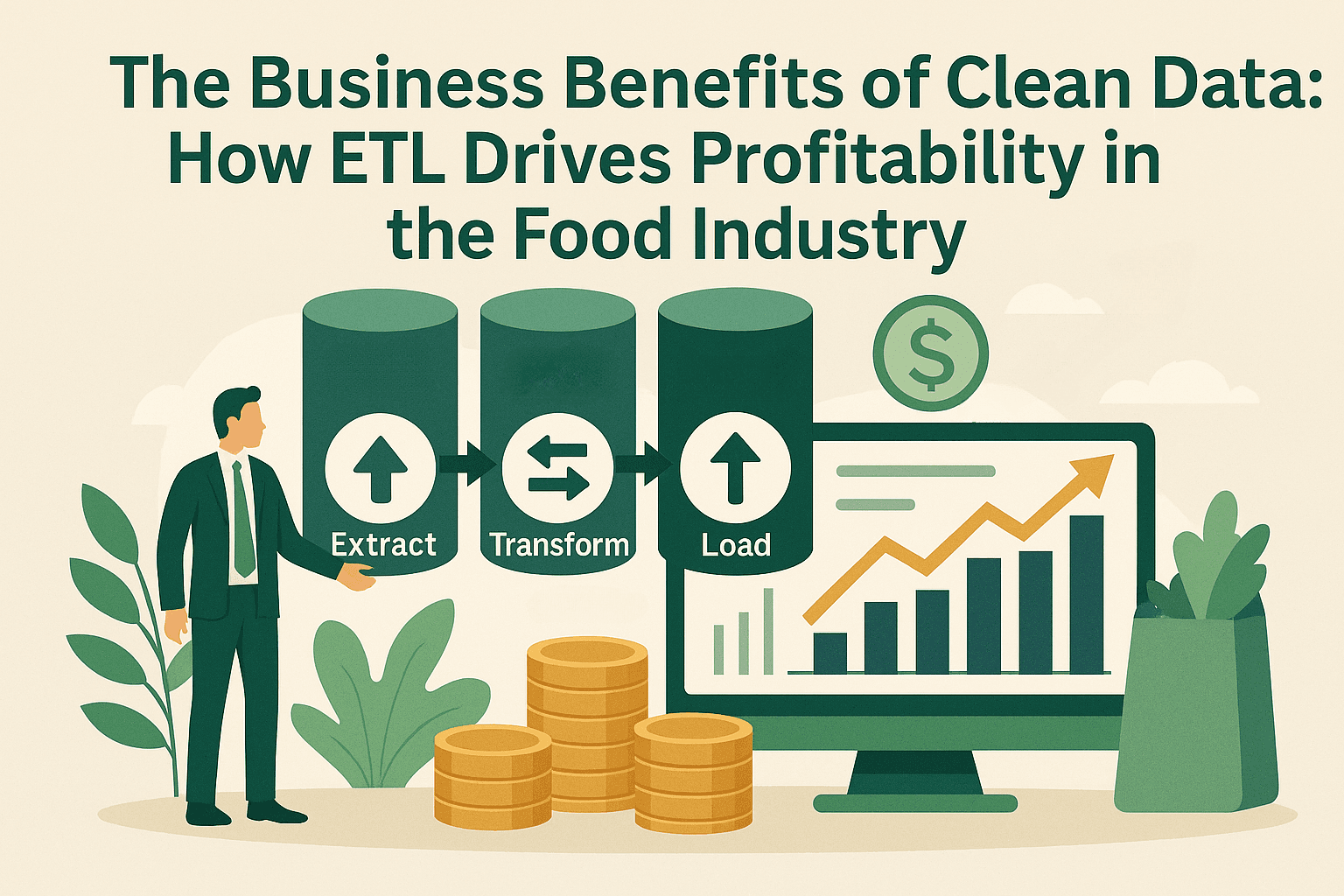
In today’s competitive food industry, profitability depends on more than great products, it requires data that is accurate, structured, and ready for action. ETL (Extract, Transform, Load) technology is the backbone of this process, enabling food businesses to gather data from multiple systems, clean it, and store it in a single, reliable source.