
How Real-Time Quota Visibility Protects Your Season and Your Bottom Line
TL;DR:
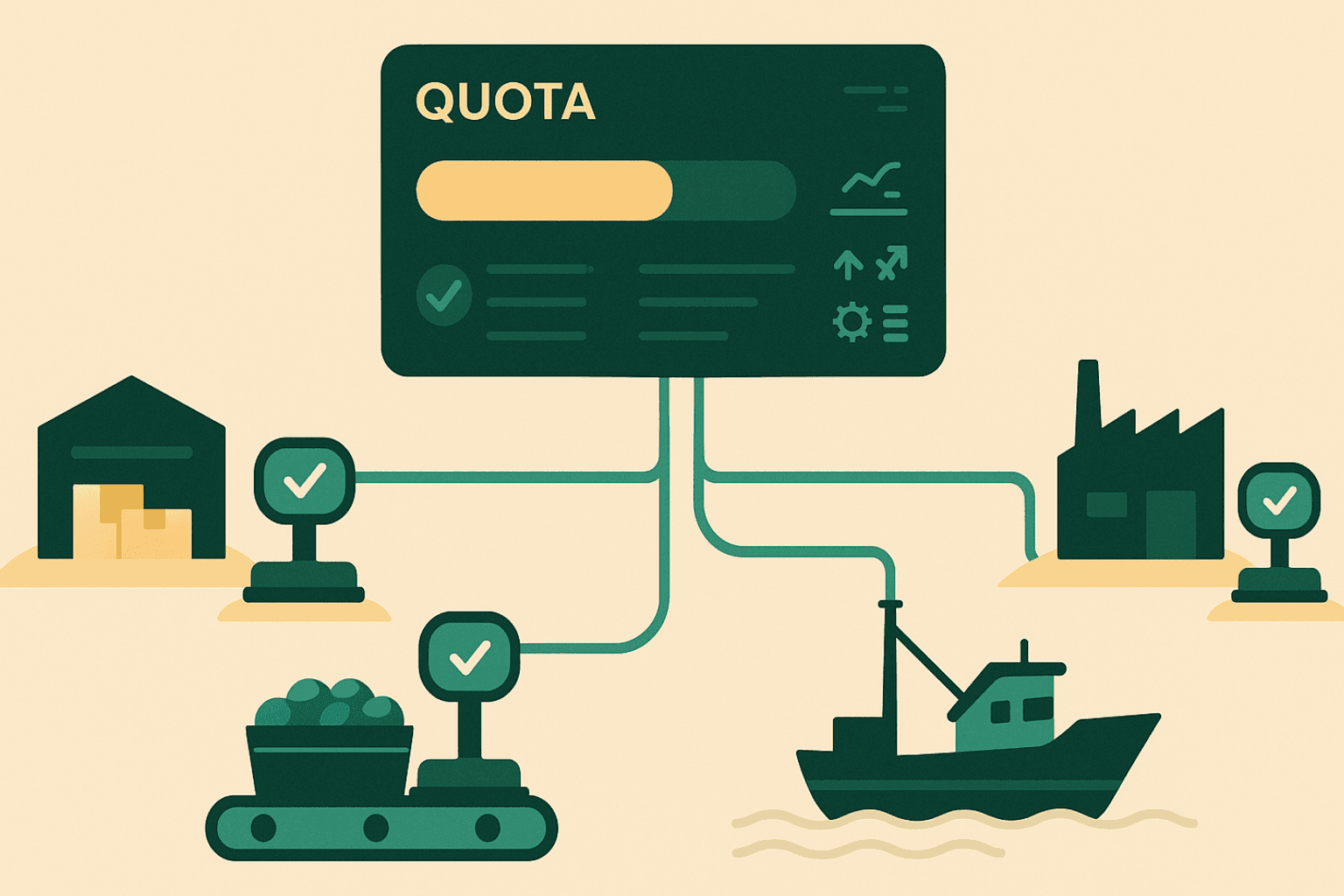
When quota data lives in spreadsheets or disconnected systems, every department is working from a different version of the truth. inecta Food ERP brings quota tracking into the same platform as your trip records, lot traceability, inventory, and settlement calculations, giving managers a connected view of allocations and usage without manual reconciliation.
The Cost of Delayed Quota Data
In food manufacturing, especially seafood, produce, and regulated commodities, quotas determine what you can produce, what you must track, and how profitable the season can be.
Yet many companies still track quota usage through spreadsheets, emails, paper logs, and end-of-day reporting. These tools aren't necessarily wrong, but they're always late. By the time the numbers are assembled and verified, the decisions that depended on them have already been made.
That gap between when catch happens and when the quota picture is updated is where compliance risks grow and margins erode. Procurement overbuys. Sales overpromises. Production misallocates product. Finance reconciles after the fact instead of planning ahead.
What Quota Visibility Actually Requires
Most manufacturers think they have quota visibility. What they really have is historical quota reporting, numbers assembled after the fact, usually by one person who owns the spreadsheet.
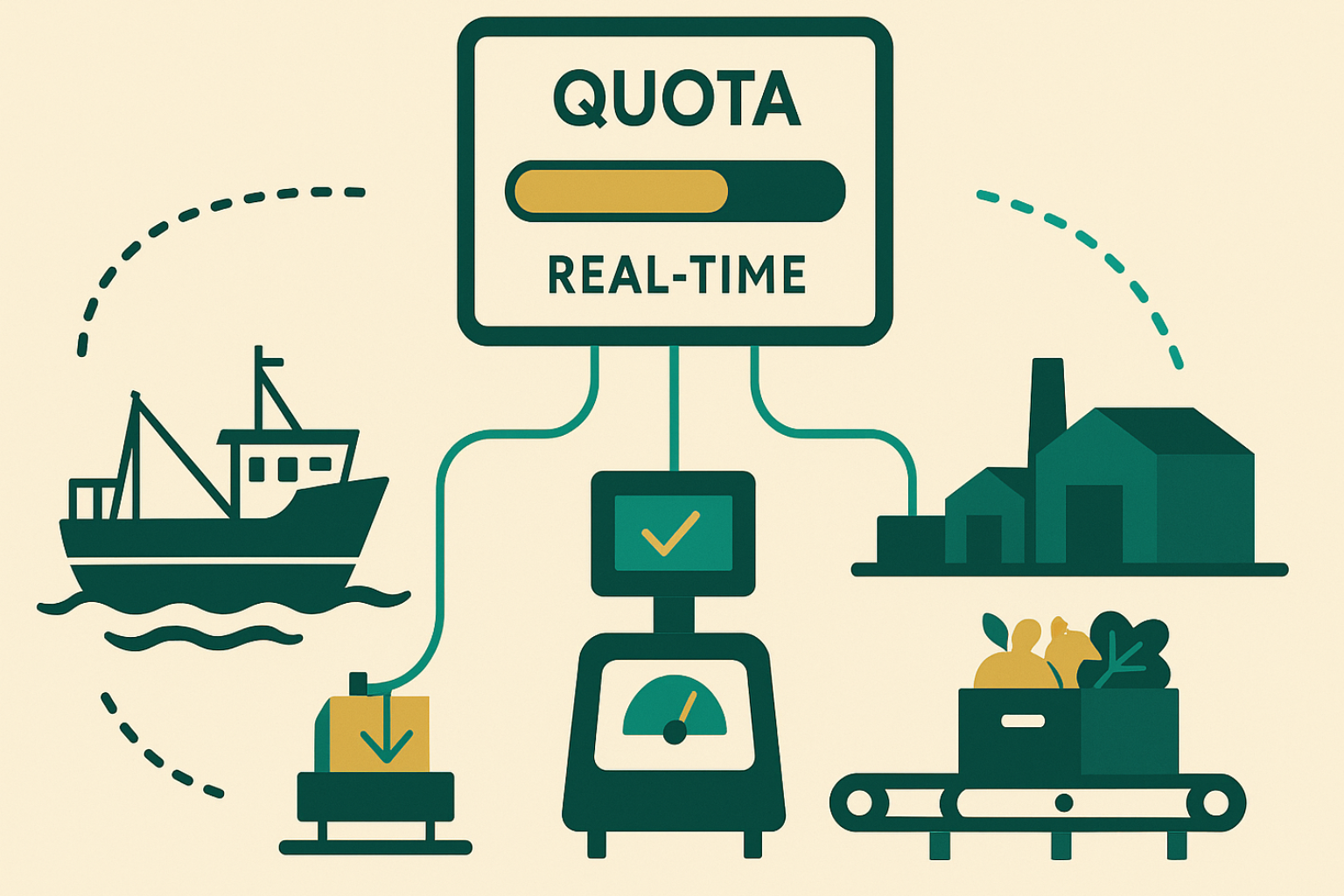
Meaningful quota visibility means something different. It means the data that drives quota decisions, catch volumes, seasonal allocations, vessel assignments, lot records, lives in the same system where production, inventory, and financial decisions are made. Not exported from one tool and imported into another. Not reconciled weekly. Connected at the source.
When quota data is structurally connected to the rest of your operation, every department sees the same numbers. That's the difference between visibility and reporting.
How inecta Food ERP Connects Quota Data to Daily Operations
inecta Food ERP, built on Microsoft Dynamics 365 Business Central, tracks quota allocations through dedicated structures inside the ERP, not in a bolt-on tool or external database.
Fishing Ledger Entries record each catch against its quota allocation. Vessel Area Season records define the boundaries of each allocation, which vessel, which fishing area, which season. These structures connect directly to Trip Cards, which capture the full operational record of each fishing trip: vessel, dates, species, grades, and weights.
Because quota tracking and trip records live in the same platform as lot traceability, inventory management, and settlement calculations, the data doesn't need to be exported or reconciled. When a trip closes and its catch data is recorded, the quota picture updates as part of the same workflow, not as a separate step handled by a different team.
Compliance That Doesn't Depend on After-the-Fact Assembly
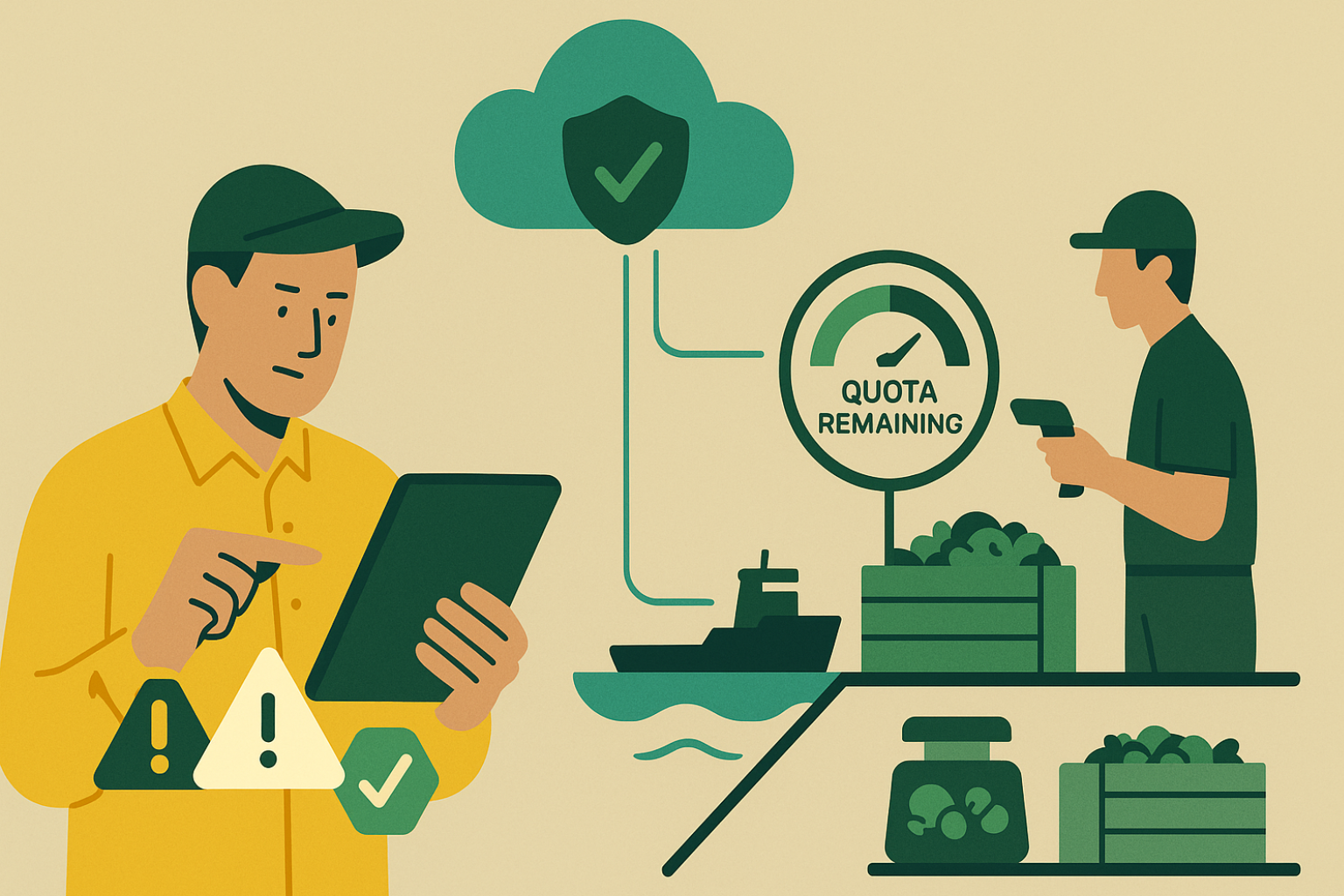
Quotas exist because regulators require strict limits on harvesting, catch weight, raw material intake, and seasonal allocations. When those limits are tracked manually, companies risk overages that lead to fines and investigations, under-reporting that triggers failed audits, and inconsistent documentation that undermines credibility with buyers and regulators alike.
inecta Food ERP addresses this by keeping compliance data connected to the operational records that generate it. Lot traceability tracks every product back to its catch, vendor, and harvest data. VTR (Vessel Trip Report) compliance documentation draws from trip records captured during normal operations. Finance gets accurate numbers because the settlement and quota data share the same source.
The goal isn't to add more compliance steps, it's to eliminate the separate compliance workflow entirely by making the operational record the compliance record.
Better Decisions Start With Connected Data
When quota tracking, trip records, lot traceability, and settlement calculations all live in one platform, leadership doesn't need to request reports or wait for reconciliation. The data is there, structured, connected, and current.
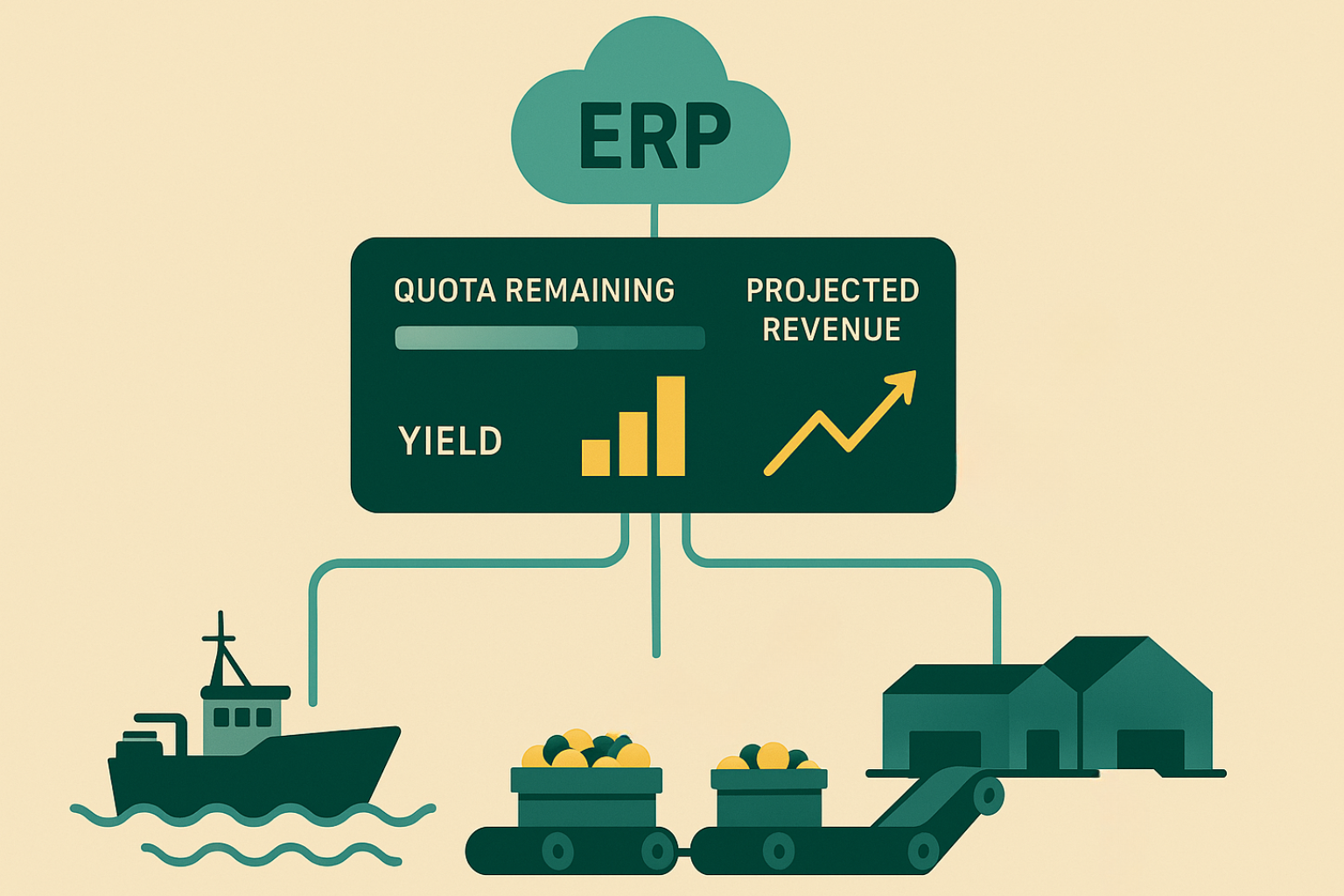
Operations can review quota allocations by vessel, area, and season. Finance can assess trip-level profitability. Compliance teams can trace any product back to its quota context. Executives can evaluate how the season is progressing based on actual recorded data rather than estimates assembled from multiple sources.
For companies managing multiple vessels, regions, and seasons, this connected view is the difference between reacting to problems after the season and managing the season as it unfolds.
FAQ
1. What is quota visibility in inecta Food ERP?
Quota visibility means your quota allocations, catch entries, and seasonal limits are tracked inside the same system as your trip records, lot traceability, and financial settlement, giving every department access to the same connected data.
2. How does connected quota data improve compliance?
By keeping quota records, trip data, and lot traceability in one platform, compliance documentation is built from the same operational records, eliminating the need to assemble reports from scattered sources after the fact.
3. How does quota visibility affect profitability?
When leadership can review quota allocations and trip-level data without waiting for manual reconciliation, they can make more informed decisions about production, procurement, and seasonal strategy.
Stop assembling your quota picture from scattered sources.
See how inecta Food ERP connects catch data, trip records, and compliance documentation in one system.
Request a demo: https://www.inecta.com/contact
Learn more about inecta Food ERP: https://www.inecta.com/food-erp